Crimea Autonomous Republic - Overview
The Autonomous Republic of Crimea is located on the Crimean Peninsula. Simferopol is the capital city of the region. The Crimean Peninsula is divided into two parts. The first one is a steppe area, with huge open spaces and dry, hot summer.
The other part consists of the coasts of the Black and Azov seas with a subtropical climate. The natural boundary between the areas is the eye-catching Crimean Mountains with a dormant volcano called Kara-Dag.
Since 2014, Crimea is controlled by Russia.
The population of the Republic of Crimea is about 1,915,000 (2021).
The area of the Republic of Crimea is 26,081 sq. km.
The current status of Crimea
The current status of Crimea is disputed between Ukraine and Russia. De facto, it is controlled by Russia.
On March 16, 2014, a referendum was held and the results showed that the majority of Crimeans voted for independence of Crimea and joining Russia. However, the legitimacy of the referendum is questionable.
It was not recognized internationally. This event is widely regarded as the annexation of Crimea by Russia. Ukraine considers Crimea as its territory temporarily occupied by Russia.
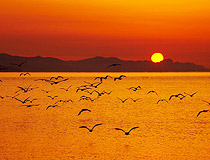
Landscapes of Crimea
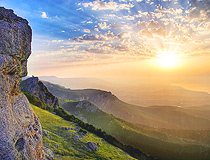
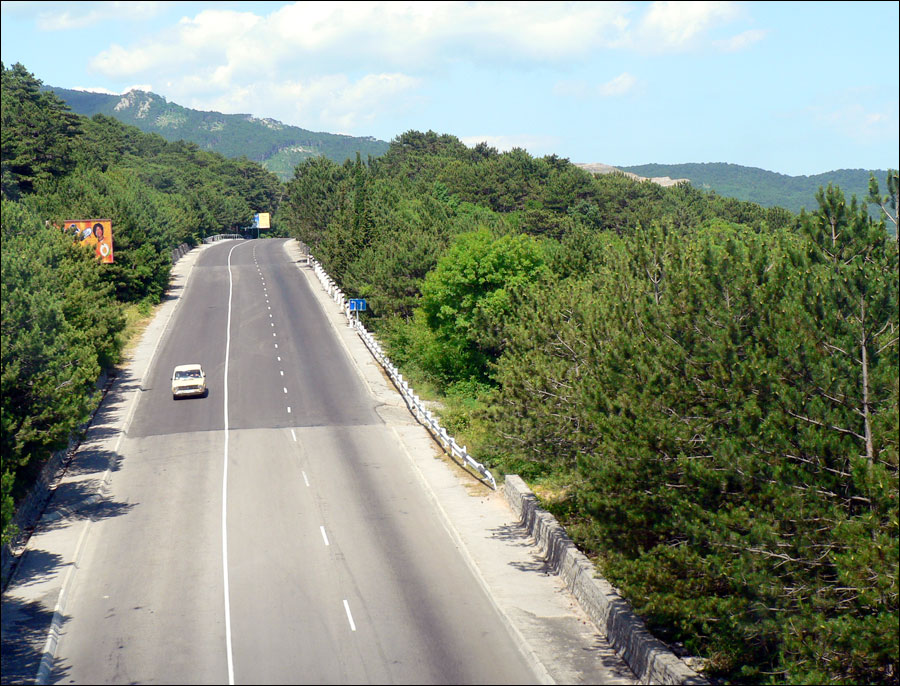
Crimea is beautiful
Author: Andrey Jitkov
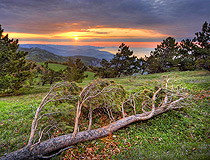
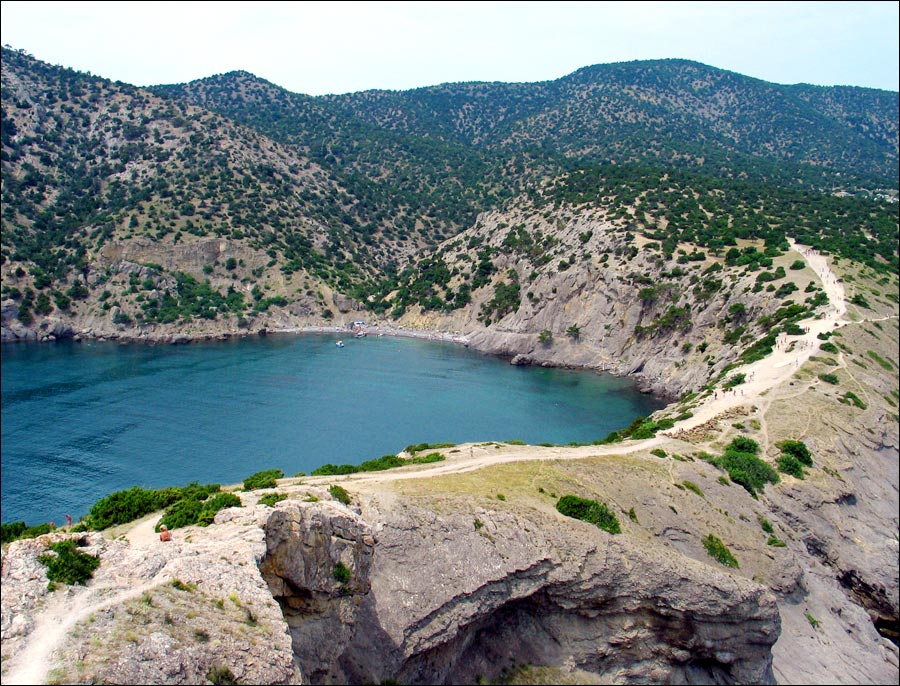
Crimea scenery
Author: Andrey Jitkov
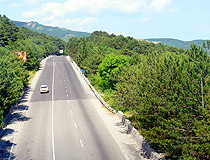
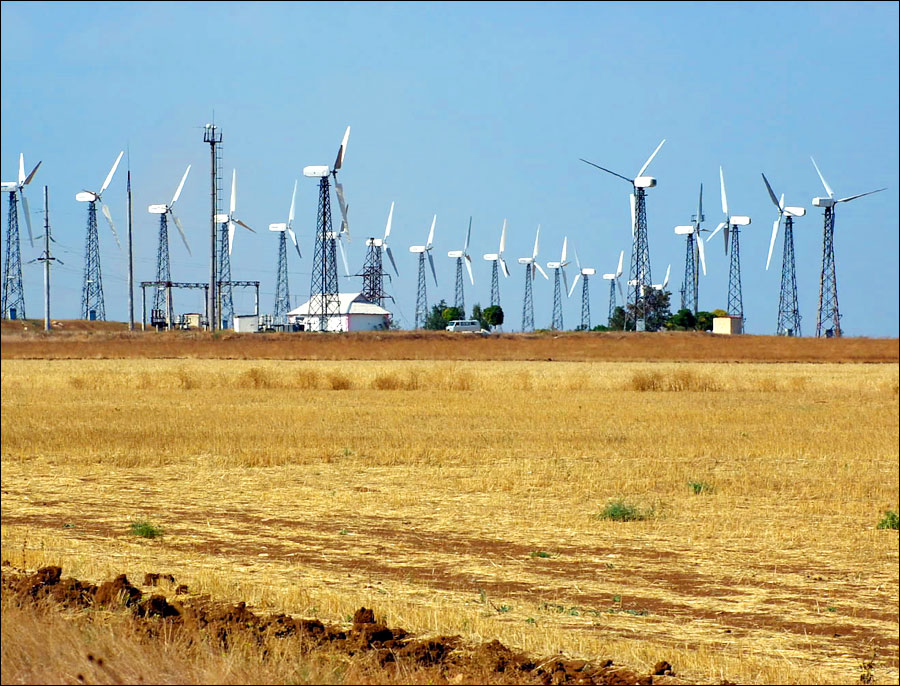
Crimea Republic scenery
Author: Dmitriy Tkachenko
Crimea - Features
Crimea was one of the most famous resorts in the Russian Empire and the Soviet Union because of its warm sea, clean air and bright sun.
Other reasons include hot springs, mineral waters and the mud baths of Saky.
Industry: food processing, chemical and petrochemical industries, machine-building, fuel industry (oil extraction).
Agriculture: grains, vegetables, fruits, grapes; cattle and poultry farming.
History of Crimea
The Scythians established their kingdom in the steppes of Crimea in the 6th-5th centuries B.C. You can still see the ruins of the Scythian capital of Neapolis on the southern edge of Simferopol, present capital of Crimea.
Greek colonies united to form the Bosporan kingdom near the Scythian kingdom in the 5th century B.C. The most important Greek colony was Chersonese, which was established at the place of the present-day Sevastopol. You can still see the ruins of the colony in Sevastopol, the second-largest city in Crimea.
Chersonese became a vassal state of the Roman Empire about the time of Christ. Christianity reached Crimea in the 3rd century. After forcing Chersonese to accept it, Prince Volodimir began establishing Christianity throughout present-day Ukraine and into Russia.
Meanwhile, German tribes known as the Goths conquered the Scythians in the 5th century. Italian traders from the city-states of Venice and Genoa captured some of the coastal lands of Crimea in the 13th century.
Later, in the 13th century, the Mongols took the peninsula - then named Tauricia - and renamed it Kyrym, from which its present name is derived. Crimea was the seat of the Mongol Empire for two centuries.
After winning the Russian-Turkish War of 1768-1774, the Russian Empire annexed Crimea. Russians, Ukrainians, Bulgarians and Germans flooded in to the area.
In 1854-1855, the Crimean Peninsula became the main theater of the Crimean War between the Russian Empire on the one hand, and Turkey, England, France on the other.
On February 19, 1954, Crimea was transferred from the Russian SFSR (present Russian Federation) to the Ukrainian SSR (present Ukraine) as a gift to friendly Ukrainian nation from Russians.
With the collapse of the Soviet Union, Crimea became part of independent Ukraine.
But the population was ethnically and culturally Russian for the most part. This led to tensions between Russia and Ukraine.
Nature of Crimea
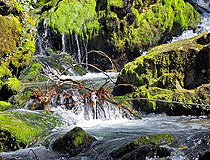
Crimea nature
Author: Sergey Bulanov
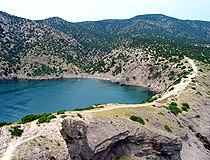
Crimea nature scenery
Author: Andrey Jitkov
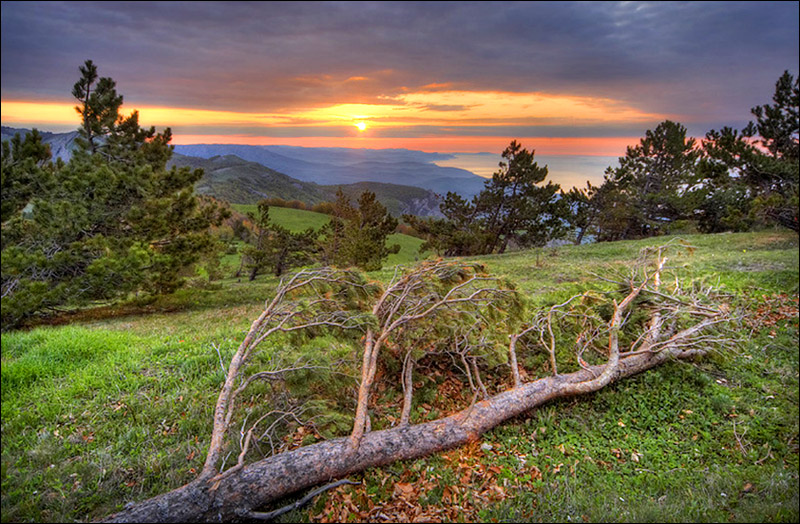
Crimea Republic landscape
Author: Pavel Danko
Attractions of Crimea
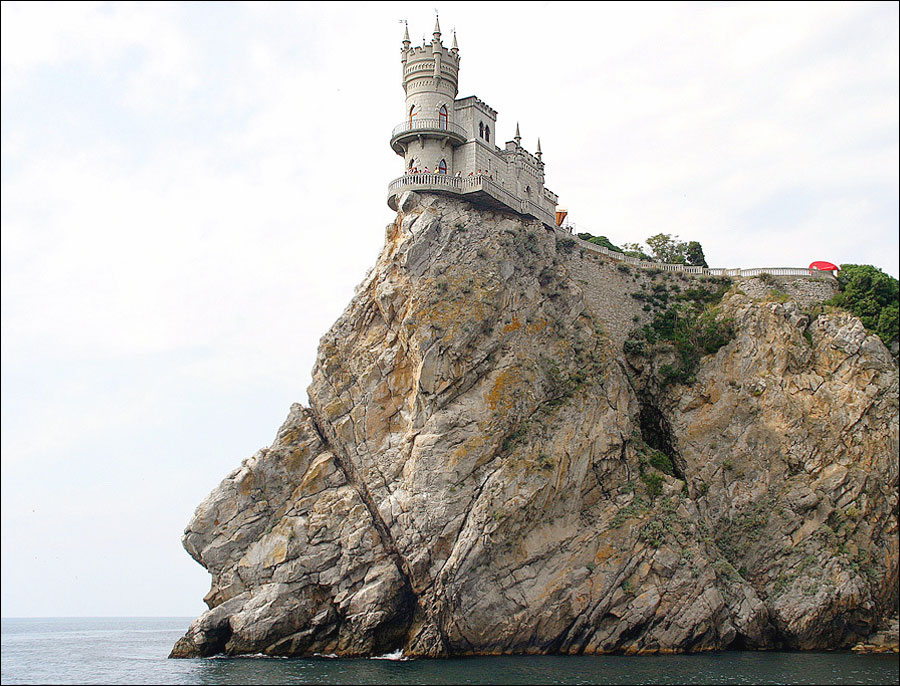
“Lastochkino Gnezdo” (the Swallow’s Nest)
This incredibly beautiful building clings to a cliff right over the sea. The architect A.Sherwood designed it to look like a medieval castle. It was built in 1911-1912 in Haspra, above Aurora’s cliff.
“Polyana Skazok” (the Meadow of Fairy Tales)
This open-air museum has more than 200 sculptures that represent various fairy tales. Crimean artists, wood carvers and stonecutters created them. The fairy-tale museum is a branch of the local historical museum. It is located about 3 miles from Yalta.
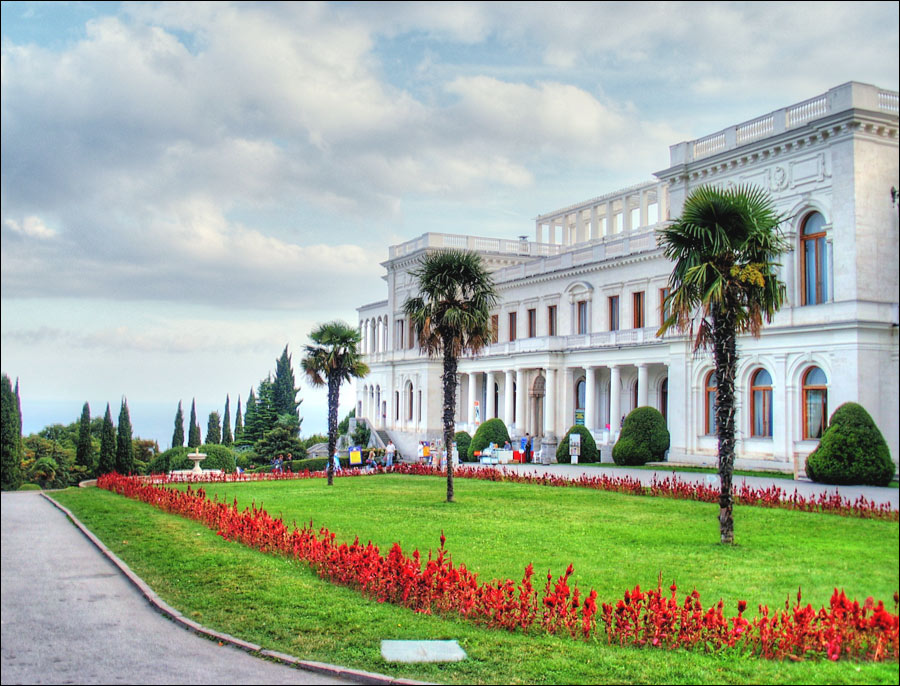
Livadiya Palace
This was the summer residence of Russian emperors in the 19th - early 20th centuries. The palace complex has 60 buildings. The centerpiece is the Great Palace, built in the Italian Renaissance style with some elements of Byzantine, Gothic and Arabic architecture.
Yalta conference of 1945, during which Roosevelt, Churchill and Stalin completed plans for Germany’s defeat, was held on the palace grounds.
Genoese fortress in Sudak and Noviy Svet
It is a gem on Crimean seaside with a gorgeous coastline and wonderful mountain vistas. Also, it is a grape-growing area.
Genoese fortress was built between 1371 and 1409. It is one of the most important examples of medieval architecture in the world.
The nearby village of Noviy Svet has been the center of champagne production since the 18th century.
The area between Sudak and Noviy Svet includes two lovely grottos. There are three lagoons in the area as well. The green, blue and dark-blue waters make it one of the most picturesque seascapes in this part of the world.
Nikitskiy Botanical Garden
This superb example of architectural landscaping is a large scientific-research establishment and a nature preserve. More than 28,000 species and hybrids of tropical plants have been assembled here.
The arboretum is one of the finest in the world. The trees and shrubs are planted in individual groups or picturesque clusters that blend into a single artistic design. Also, there is a wonderful rosarium and a special display of clematis and chrysanthemums.
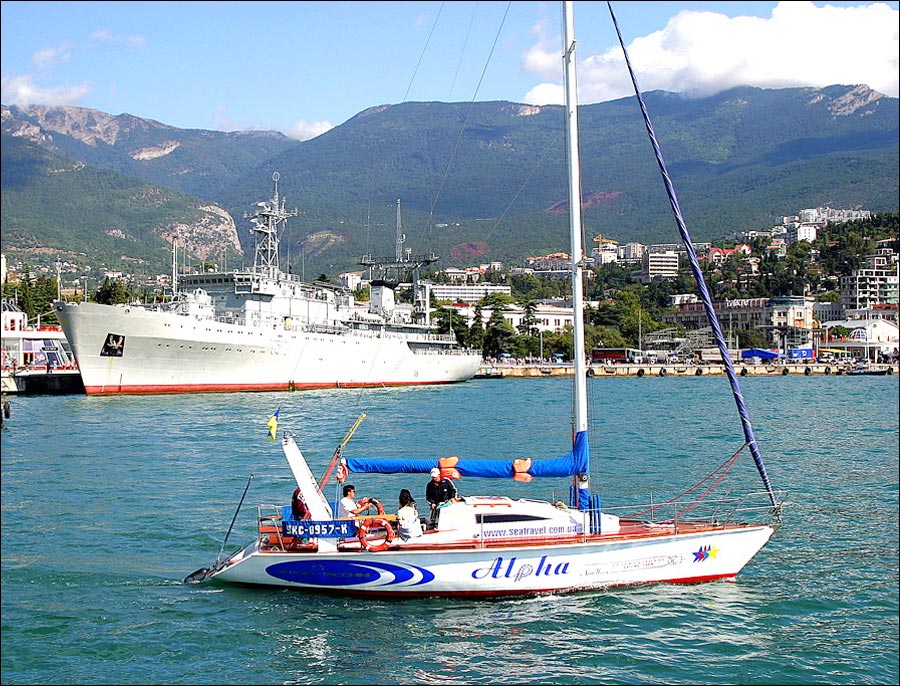
Yalta city
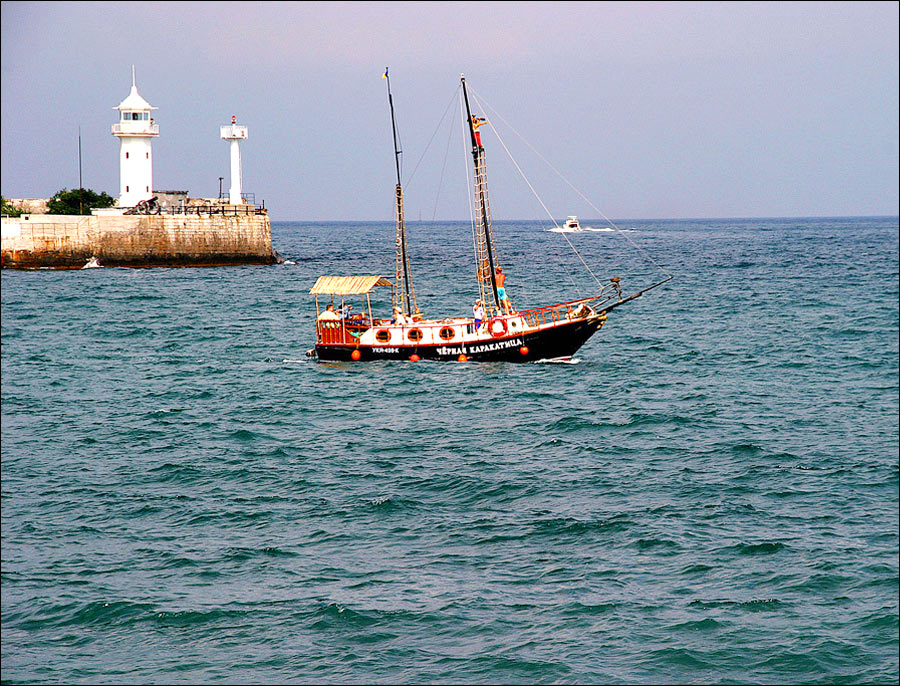
Yalta is the most famous resort on the Crimean coast. It is a beautiful, optimistic, light-hearted city.
Yalta never sleeps. You can hardly notice the difference between day and night because everything is moving.













The comments of our visitors