Current Status of Simferopol and Crimea
The current status of Simferopol is disputed between Ukraine and Russia. De facto, it is controlled by Russia as the entire Crimea.
On March 16, 2014, a referendum was held and the results showed that the majority of Crimeans voted for independence of Crimea and joining Russia. However, the legitimacy of the referendum is questionable.
It was not recognized internationally. This event is widely regarded as the annexation of Crimea by Russia. Ukraine considers Crimea as its territory temporarily occupied by Russia.
History of Simferopol
Origin of the city
The first settlements on the territory of present day Simferopol appeared in prehistoric times. Napels-Scythian is the most famous among ancient ancestors of the city.
It was the capital of the late Scythian state formed in the 3rd century B.C. and presumably destroyed by the Goths in the 3rd century A.D.
There was no large town on this territory in the early Middle Ages.
During the Crimean Khanate, it was known as Akmesdzhit (Ak-Mechet in the Russian sources). It was the residence of the Kalga - the second person in the state after the Khan. This part of Simferopol is known as the Old Town now.
The Old Town has narrow and crooked streets - typical for oriental towns.
More Historical Facts…
The Russian Empire times
After Crimea was included into the Russian Empire, it was decided to form Tavricheskaya oblast on the territory of the former khanate. Ak-Mechet became the capital of the new region.
In 1784, the construction of administrative and apartment buildings and an Orthodox church began close to Kebir-Dzhami mosque. This district of the city differs by its regular design (straight streets crossing each other at right angles) and mainly two-storey houses.
The town with both newly built quarters and the territory of Ak-Mechet received the name Simferopol. It is translated from the Greek as “the town of benefit”.
The Greek name was chosen due to the fact that, at Catherine II time, it was fashionable to give Greek names to new towns located in the southern territories. This was done in memory of the fact that several Greek colonies existed there at ancient and medieval times.
Soviet period and beyond
During the Russian Civil War (1918-1920), the city was occupied by foreign troops.
In 1945, the autonomous republic was abolished and Simferopol became the center of the Crimean region of Russia. It was granted to the Ukrainian SSR in 1954.
After the declaration of Ukrainian independence in 1991, the city became the center of the movement (Sevastopol was another center) for separating Crimea from Ukraine.
The historical and actual closeness of this region to Russia was an important reason for this movement. The vast majority of the population is Russian-speaking
Simferopol views
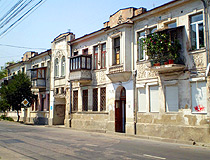
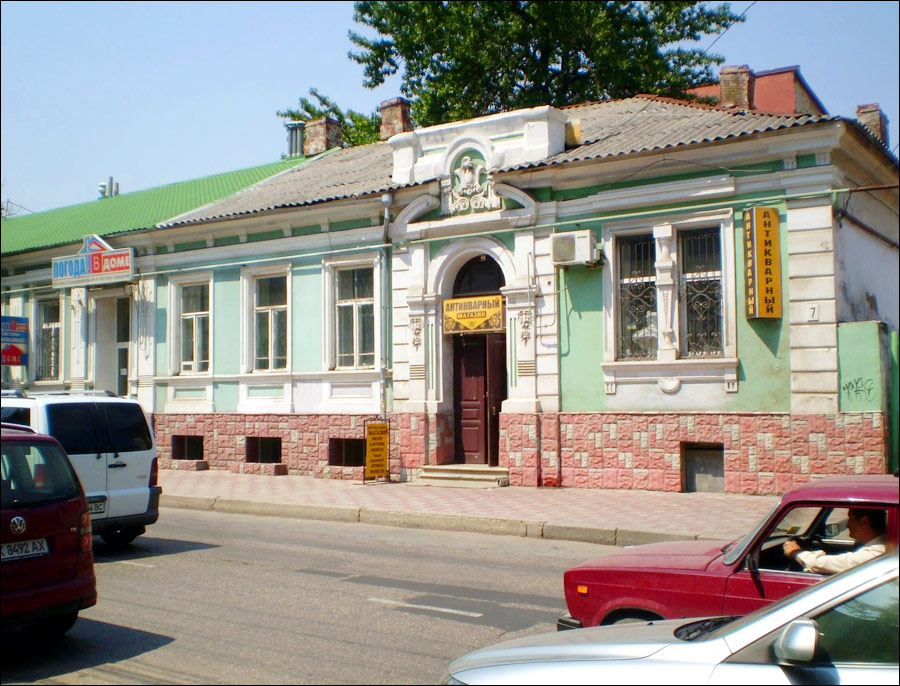
Simferopol street view
Author: Razuvaev
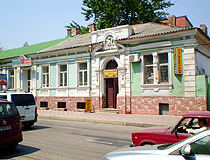
Simferopol street
Author: Razuvaev
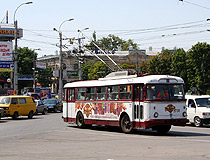
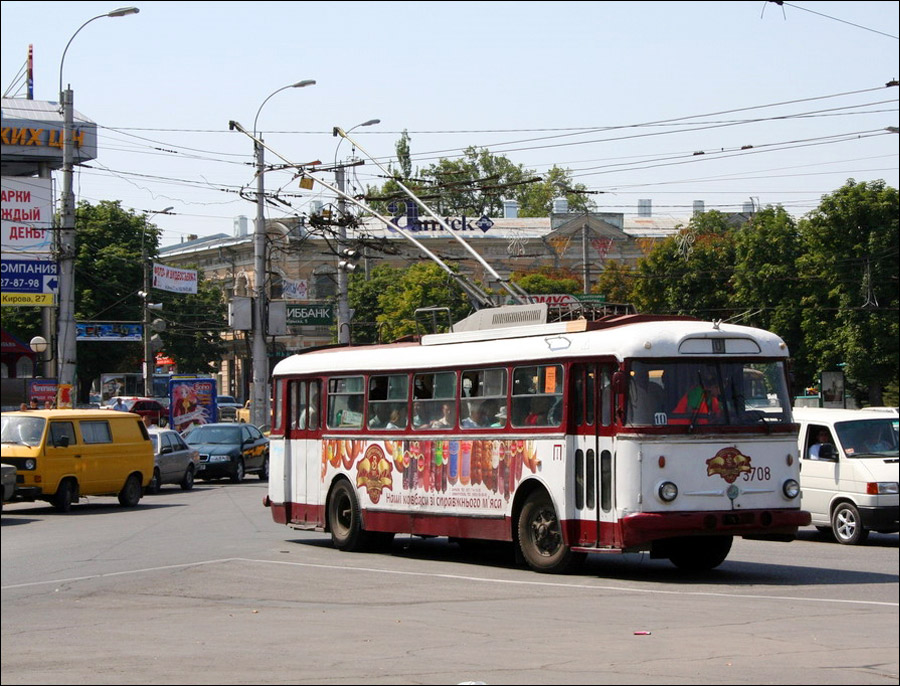
Simferopol trolleybus
Author: Buryakov
Simferopol - Features
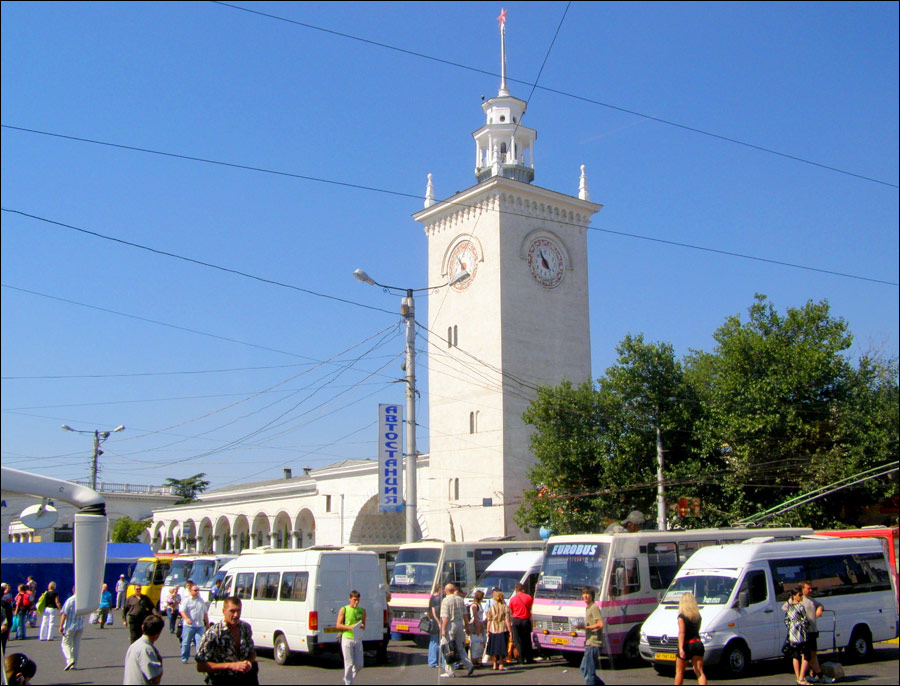
Simferopol is an important transport hub of Crimea. Almost all the ways from the republic to the outside world cross the city.
Simferopol, Alushta, and Yalta are connected with the longest in the world trolley-bus line (86,5 km).
Most of the Crimean universities are located in the city. The main university of the republic, Tavrichesky National University named after V.I. Vernadsky, founded in 1918, is among them.
Also, the city has a teacher-training, medical and agricultural institutes and several research establishments.
It has a wide range of food-processing industries, produces wine, tobacco and cigarettes. There are light engineering and consumer-goods industries, producing machine-tools, armatures, television sets, clothing and footwear.
Attractions of Simferopol
Museums
The Crimean Ethnographic Museum. The collection of the museum has four thousand artifacts that characterize traditional culture of ethnic groups of Crimea.
The collection includes exhibits of material culture, customs and rituals, traditions and holidays of thirteen ethnic groups. Pushkin Street, 18. Opening hours: 9:00-17:00, day off - Tuesday.
The Chocolate Museum. The permanent exhibition “The history of chocolate made in chocolate” is opened in Salon Du Chocolat. All exhibits are unique and made by hand in one copy.
The exhibition opens with a cocoa tree. Near the tree you can see the figurines of the American Indians who first learned how to make chocolate. Also, chocolate portraits of famous people are presented. The pride of the exhibition is a chocolate Eiffel Tower. Kirov Street, 66. Opening hours: 10:00-18:00.
The Art Museum. The museum has more than six thousand works made by the Crimean artists.
The departments of the museum:
- Domestic and foreign paintings of the 16th-20th centuries;
- The hall of graphics;
- The hall of battle-painting;
- The art of the 20th century;
- The hall of religious painting;
- The hall of Western European paintings of the 16th-19th centuries.
Karl Liebknecht Street, 35. Opening hours: 10:00-17:00, day off - Monday.
The Central Museum of Tavrida. The Crimean Republican Museum of Local History was founded in 1867. The collection has more than 100 thousand exhibits.
You can see a large archaeological collection from the Paleolithic to the Middle Ages, collection of coins, unique graphic works of the 18th-19th centuries with views of Crimea.
Also, the museum has interesting historical household items, decorative and applied art, collection of porcelain, ethnographic materials.
The exhibitions: “The landscapes of Crimea”, “The Past of Tavrida”, “Crimea in the Second World War”. Gogol Street, 14. Opening hours: 9:00-17:00, day off - Tuesday.
The Museum of Simferopol history. The museum was opened in 2009. The exhibition includes household items, documents, photos, pictures, and coins. Pushkin Street, 17. Opening hours: 10:00-17:00, day off - Monday.
Architectural monuments
Vorontsov Palace. It is one of the earliest monuments of classical architecture in Crimea, built in 1826-1827. The palace is situated in the landscape park “Salgirka”, founded in the early 19th century. Today, it is a botanical garden of Tauric National University. Yaltinskaya Street, 2, park “Salgirka”.
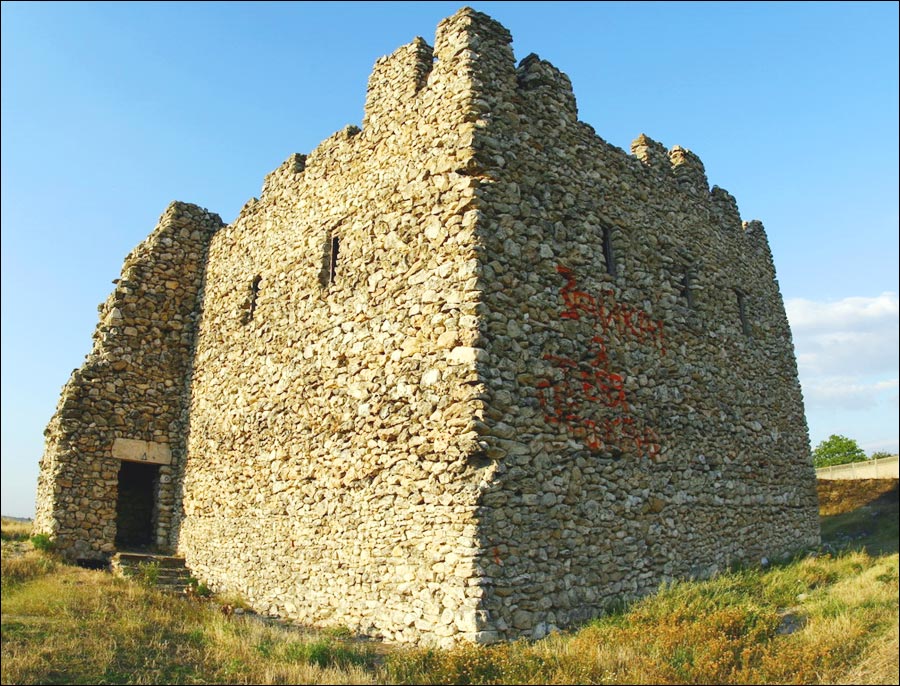
Scythian Naples. The ruins of the ancient capital of the late Scythian state are located at the top of Peter’s Hill in the center of Simferopol.
You can see a reconstructed tower, the remains of the ancient wall. There is an excavated area with the foundation of a large public building with columns, a granary. Neapolskaya Street.
Kebir-Jami Mosque. It is the main spiritual center of Muslims of Crimea, the architectural monument of the time of the Crimean Khanate. The mosque is the oldest building in the city that gave it its first name of Ak-Mechet (“White Mosque”). The mosque was built in 1508.
In 1907, the building was reconstructed and received its current forms of Turkish religious architecture. The mosque is open to tourists. You have to take off your shoes at the entrance. Kurchatov Street, 4.
Simferopol places
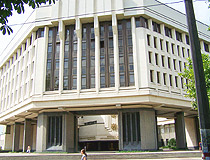
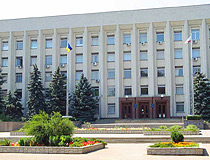
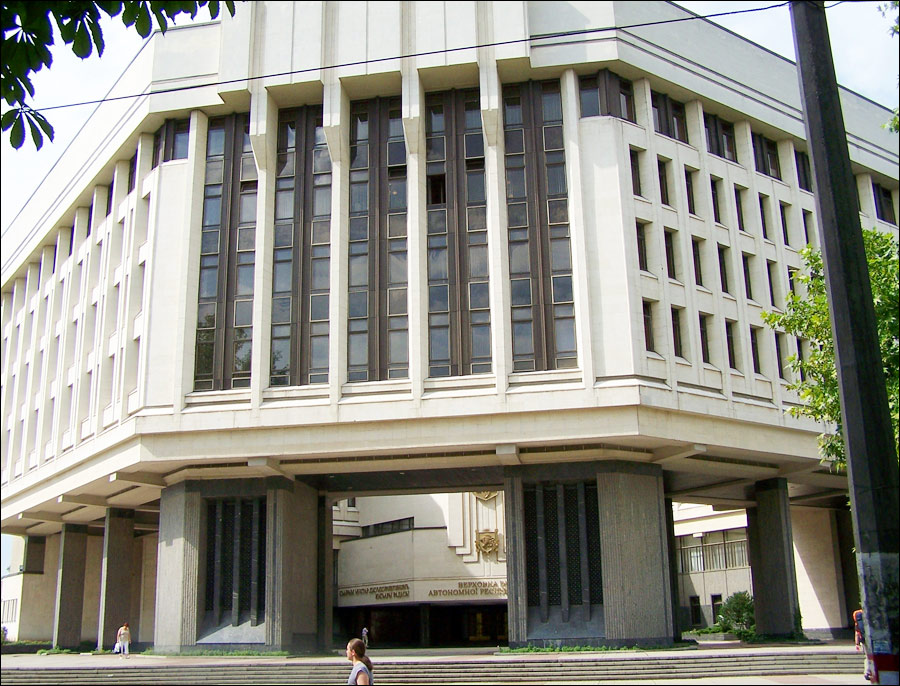
The Parliament of the Crimea Republic
Author: Petr Slezak
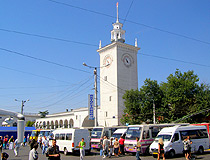
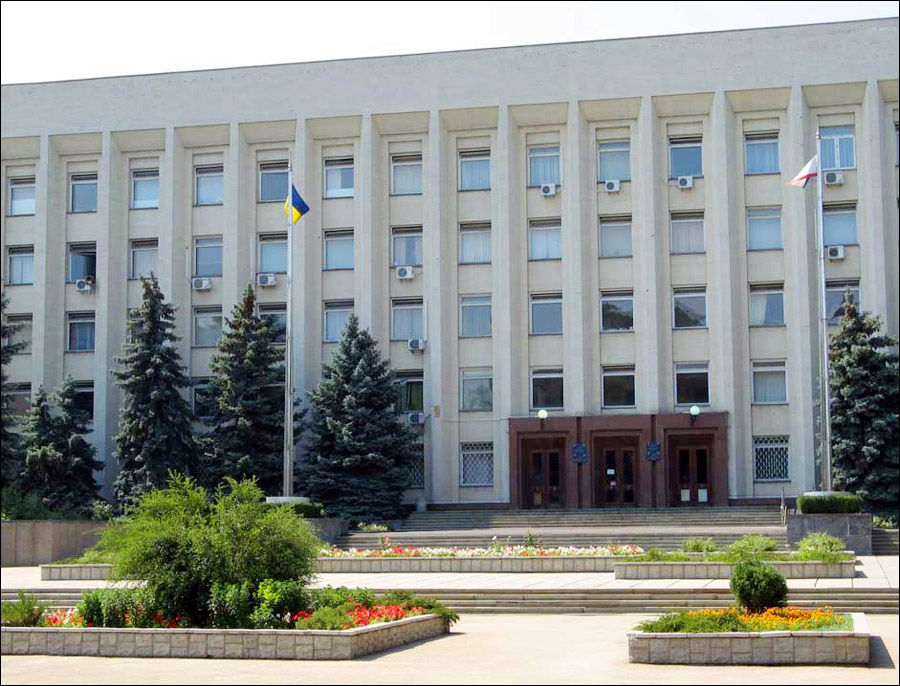
Simferopol City Hall
Author: Dudenko
Simferopol railway station
Author: Levus Sergiy
Other places of interest
The chestnut with five trunks. This tree, planted in 1829, reaches 25 meters in height and about 5 meters in circumference. Frunze Street, 30.
Chokurcha Cave. It is the site of a Paleolithic man, one of the oldest monuments of human life in Crimea. The cave is located on the eastern outskirts of Simferopol, in the valley of the Maliy Salgir River.
Among the archaeological finds are flint tools, bones and tusks of mammoths, figures, carved on the limestone. Lugovaya Street, 77.
The Obelisk of Dolgoruky. The monument was erected in honor of the capture of Crimea by the Russian army under the command of General V. Dolgoruky in 1771. Zhukovsky Street.
- The merchant row of the late 18th - the early 19th century (shops with columns) - Odesskaya Street, 12;
- The house where A.S.Griboyedov lived (1825) - Kirov Street, 25;
- The house where L.N.Tolstoy lived (1854-1855) - Tolstoy Street, 4;
- The building of the former gymnasium for boys where D.I. Mendeleyev began to work in 1855, and I.V. Kurchatov studied in 1912-1920 - Karl Marx Street, 32;
- The house-museum of Ilya Selvinsky;
- The scientific library named after I.Franko
- The 500-year-old oak “Tavrida’s Hercules” - in Detsky (“Children’s”) park. The trunk of the tree is about 6 meters in circumference, the top crown - 30 meters in diameter. Nearby, there are several 300-500-year-old oaks of smaller size.
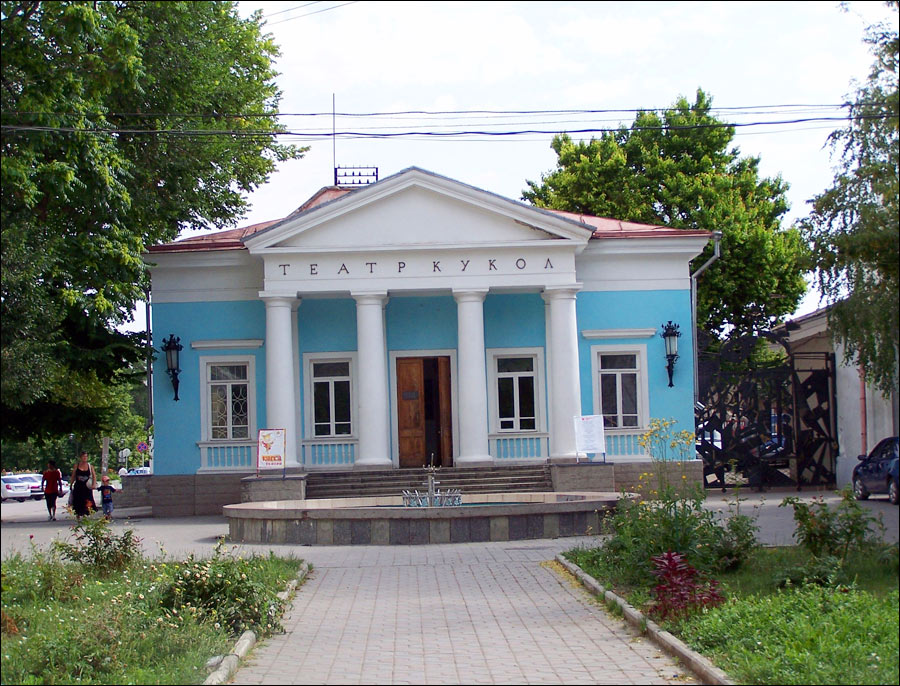
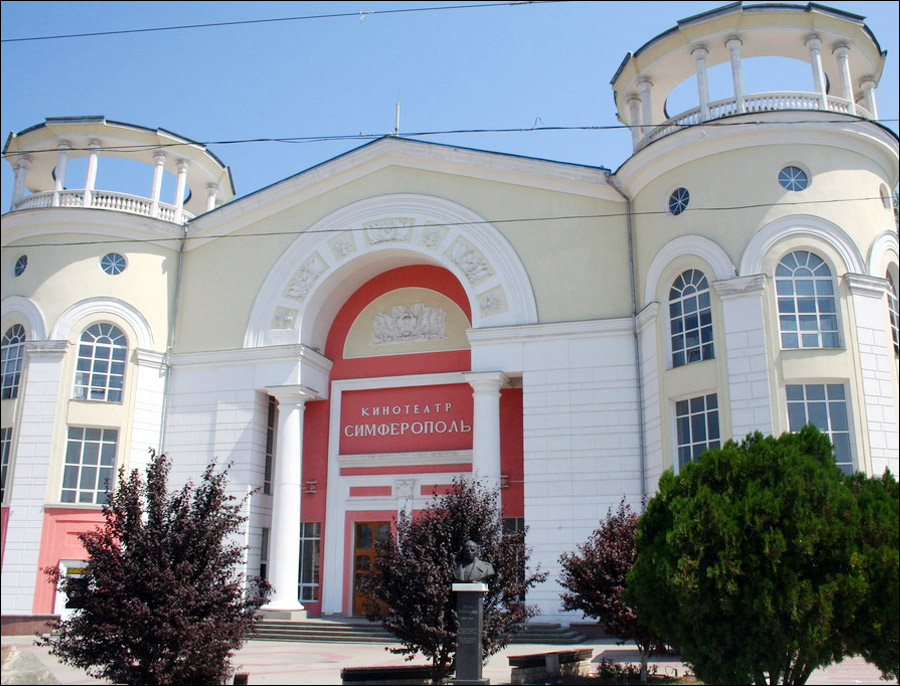
Also, Simferopol has a philharmonic society, circus, and several theaters.










The comments of our visitors