History of Kharkiv
Foundation of Kharkiv
In the early Middle Ages, different nomadic tribes lived on the territory of the Kharkiv region: Goths, Alans, Khazars, Pechenegs, Polovtsy. The territory around Kharkiv was disputed for a long time between nomadic tribes and sedentary tribes (Slavs).
The town in Rus’, called Kharka in medieval Arabic and Persian sources, the third or fourth largest among Rus’ towns, existed on the territory of today’s Kharkiv at the beginning of the 10th century, long before the official date of foundation of Kharkiv. It was destroyed either by the Polovtsy in the 11th-12th centuries or the Mongols in the 13th century.
Also on the territory of Kharkiv, downstream 10 km from the pre-Mongolian Kharka, there was an old Russian outpost Donets of the Novgorod-Seversky Principality. It was in this town that Prince Igor Svyatoslavich, who escaped from the Polovtsian captivity, arrived in 1185 or 1186, as described in the Tale of Igor’s Campaign. In 1239, it was destroyed by the Mongols.
Today’s Kharkiv arose on the site of the destroyed Kharka around 1630. It was a small fortress on the territory controlled by the Tsardom of Russia, built to protect this border region and its population from nomadic raids. The Kharkiv Historical Museum has a model of this first wooden fortress.
Kharkiv was settled mainly by people from the Right-Bank Ukraine and the Dnieper region, who fled to the Tsardom of Russia during the uprising of Bohdan Khmelnitsky (the Cossack-Polish war). In 1656, Aleksey Mikhaylovich, the Tsar of Russia, signed a decree on the establishment of the Kharkiv Voivodeship. Kharkiv became the center of the Kharkiv Cossack regiment.
More Historical Facts…
Kharkiv in the 18th-19th centuries
In 1726, the Intercession Monastery was founded on the territory of the Kharkiv fortress. The monastery church is the oldest in the city. Kharkiv residents participated in Russian military campaigns in the Crimea, the Sea of Azov and in the Northern War, as well as in the Russian-Polish conflicts. In 1765, after the establishment of the Sloboda-Ukrainian Governorate, the town became its center.
In 1789, the first stationary theater was opened in Kharkiv, in 1805 - the second university on the present territory of Ukraine. In 1836, the Sloboda-Ukrainian Governorate received a new name - the Kharkiv Governorate.
At the beginning of the 19th century Kharkiv began to develop as an industrial center. In 1837, there were over 70 small industrial enterprises in this town: mills, lard furnaces, distilleries, and tanneries. In the middle of the 19th century, its population was about 30 thousand people.
In the second half of the 19th century, due to the abolition of serfdom and the rapid development of the Donetsk-Krivoy Rog region, Kharkiv became one of the largest economic centers of the Russian Empire. In 1861-1897, its population more than tripled (from 50 to 174 thousand people). One of the factors that directly influenced this was the development of rail transport.
In 1869, a railway line connected Kharkiv with Moscow, and then with the Donbass, Kyiv, the ports of the Black and Azov Seas. In 1897, the Kharkiv Locomotive Plant began its work. Gradually, the local enterprises began to produce a variety of different machinery - from agricultural machines to engines.
In 1881, the first stage of the city water supply was put into operation. At the end of the 19th century, the first power plant was built, which made it possible to begin the electrification of urban transport. In 1905, the first electric tram appeared on the streets of the city. At the end of the 19th century, Kharkiv was a large industrial, scientific and cultural center with great potential.
Kharkiv before the Second World War
In 1913, the population of Kharkiv was about 247,000 people. In 1916, at the height of the First World War, cloth workshops were opened in the city for tailoring army uniforms. The largest of them, evacuated from Lodz (Poland) in 1915, received the name “Red Thread”. The Russian-Baltic Electrotechnical Plant was also transferred from Riga (Latvia) to Kharkiv during this war.
From 1918 to 1919, Kharkiv was the capital of the Ukrainian People’s Soviet Republic and Donetsk-Krivoy Rog Soviet Republic within Soviet Russia. From the end of 1919 to 1934, Kharkiv was the capital of the Ukrainian Soviet Republic, which became one of the founders of the USSR in 1922.
As the capital of Soviet Ukraine, Kharkiv was rapidly built up. The city’s population growth was also rapid. From 1920 to 1939, its population grew from 285 to 833 thousand people. In 1924, the first radio station in Ukraine began to operate here.
Dzerzhinsky Square (today’s Freedom Square) with a complex of buildings of Gosprom (1925-1929) became the new center of Kharkiv. According to its economic development, it became the third industrial center of the USSR after Moscow and Leningrad. Before the Second World War, local mechanical engineering produced about 40% of the output of the entire machine-building industry of Ukraine.
In 1934, the capital of the Ukrainian SSR was moved from Kharkiv to Kyiv. The granting of Kharkiv with the capital status was done during the Civil War and was a temporary measure.
In the 1920s-1930s, the work of many new scientific organizations and institutes of Kharkiv began: the Ukrainian X-ray Academy, the Institute of Hematology and Blood Transfusion, the Ukrainian Institute of Physics and Technology, etc. Kharkiv became the leading scientific center of Ukraine. In 1940, there were 36 universities and 46 research institutes here.
The change in the status of the city and its transformation from the capital into a regional center somewhat slowed down the development of Kharkiv, but it retained its significance as the second city of Ukraine.
Kharkiv during the Second World War
Kharkiv was the most populated city in the Soviet Union occupied by Germans during the Second World War. The population of Kharkiv on May 1, 1941 was 901 thousand people, in September 1941, together with the evacuees, it was about 1 million 500 thousand.
The city was occupied by the Germans on October 24-25, 1941. The battle for Kharkiv was not long due to the result of the battle for Kyiv in September, where the Red Army was defeated and lost about 700,000 people.
For the first time in the history of World War II, radio-controlled mines were used in Kharkiv during the retreat of the Red Army. The most famous explosion of a radio-controlled mine was made from Voronezh at 3:30 am on November 14, 1941. The German headquarters flew into the air at Dzerzhinsky Street, 17 (the building for the secretaries of the Communist Party of Ukraine). Major General Georg von Braun, the commander of the 68th Wehrmacht infantry division and the head of the Kharkiv garrison, was killed.
On February 16, 1943, during one of the offensives of the Red Army launched after the Battle of Stalingrad, Kharkiv was liberated. However, the counteroffensive of the German troops led to the second surrender of the city on March 15-16, 1943. In August 1943, Kharkiv was finally liberated. The population decreased to about 200 thousand. August 23, the official day of the liberation of Kharkiv, became a city holiday. In the 1980s, it was named the City Day of Kharkiv.
In the battles for Kharkiv and during its two-time occupation, the USSR and Germany lost more people than anywhere else in the history of World War II, including Stalingrad. Dozens of architectural monuments were destroyed, numerous pieces of art were taken to Germany.
Kharkiv in the second part of the 20th century
The restoration of the destroyed Kharkiv began during the war and continued in subsequent years, simultaneously with the reconstruction and growth of the city. By the beginning of the 1950s, the pre-war levels of production were reached.
Kharkiv was rebuilt as a city of broad streets, large apartment blocks, imposing and often ponderous administrative and office buildings, and large plants. It also became the main transport hub of southeastern Europe. In 1962, the population of the city exceeded 1 million people. Kharkiv became the second largest city of Ukraine after Kyiv.
In the post-war period, the city infrastructure was improved: gasification of residential premises began, a new water supply system was built, tram routes, trolleybus and bus lines were expanded. On July 15, 1975, the first line of the Kharkiv metro was put into operation (in 1984 - the second, in 1995 - the third).
In terms of population, industrial, scientific, technical and cultural potential, Kharkiv was not much inferior to Kyiv and during these years practically claimed the role of the second capital of Ukraine.
Kharkiv in independent Ukraine
After the collapse of the USSR, Kharkiv experienced depopulation. Its population decreased from 1.621 million in 1992 to 1.448 million in 2008. In 2011-2012, the population of the city stabilized. A significant number of industrial enterprises and universities ceased to exist.
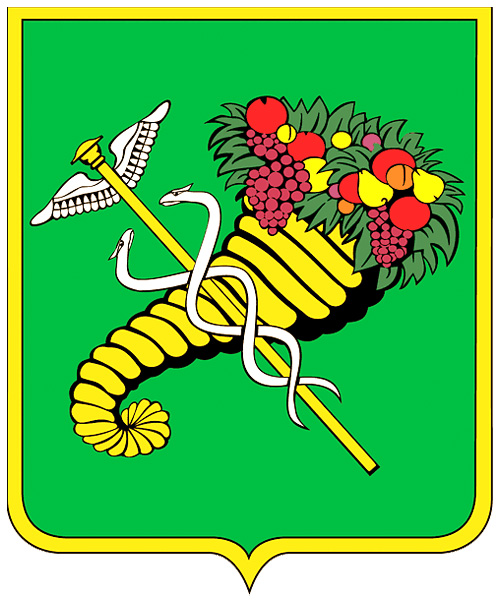
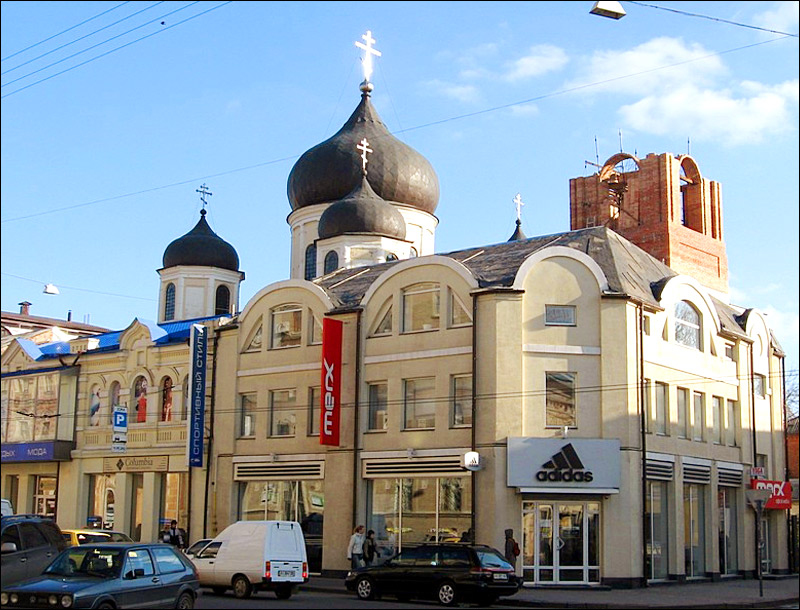
In the mid-1990s, the current emblem and flag of Kharkiv were approved. During the post-Soviet period, a lot of churches were restored or built in the city, including Chuk Lam Kharkiv, the largest Buddhist temple complex in Europe.
In 2010, Kharkiv was recognized as the best city in terms of quality of life in Ukraine. In 2011, it shared the first place with Kyiv. Kharkiv was one of the four cities of Ukraine that hosted the European Football Championship 2012. In 2013, the city council of Kharkiv awarded the city the title of “city of military glory” (for the first time in the history of Ukraine).
On November 20, 2015, the Kharkiv City Council decided to rename 173 streets in accordance with the law on decommunization. Of these, 50 returned their historical names, the rest received the names of prominent architects, actors, historians, scientists, philosophers, rectors of universities, and other iconic people for Kharkiv and Ukraine.
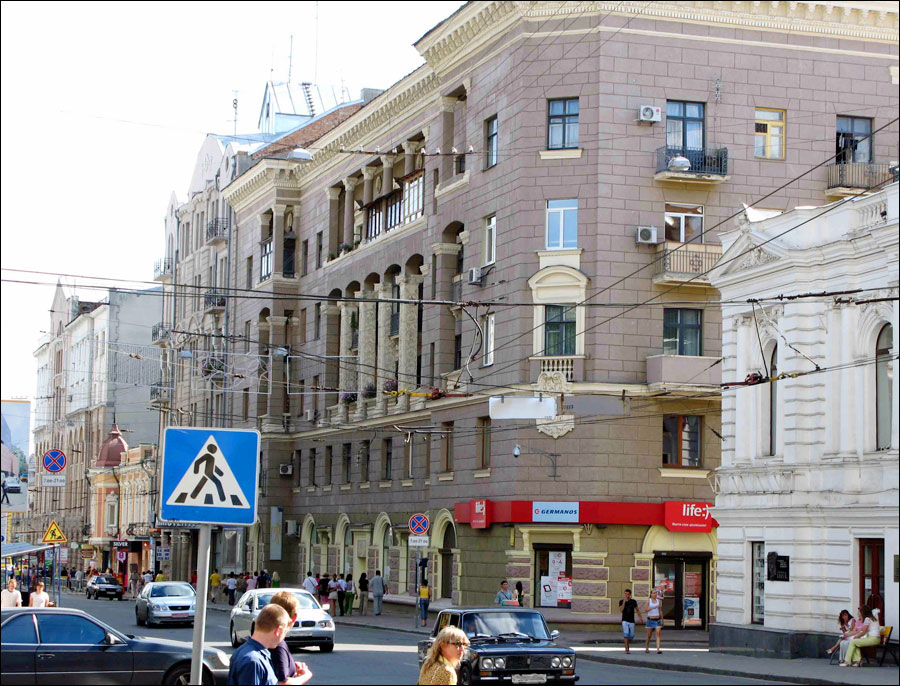
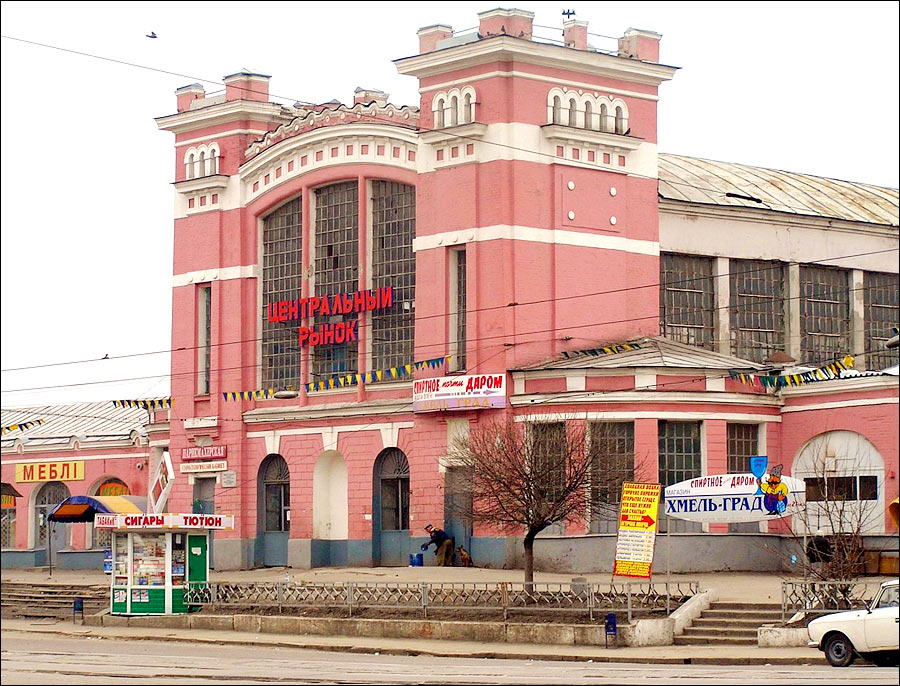
On the streets of Kharkiv
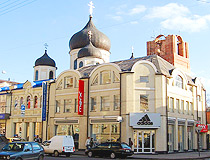
Architecture of Kharkiv
Author: Andrey Kholmanskiy
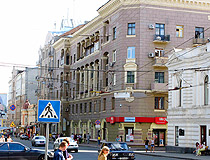
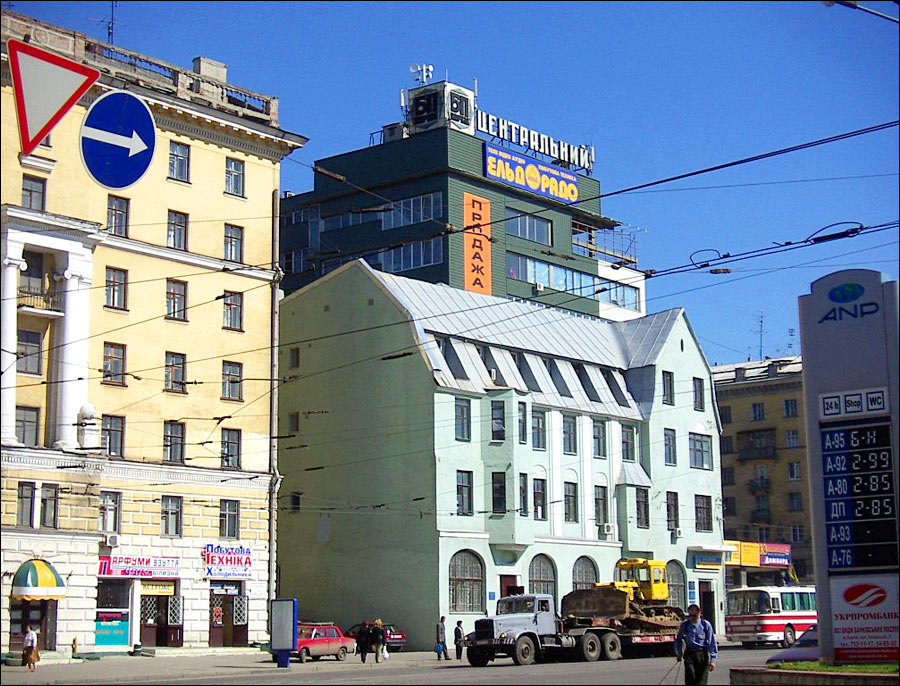
In the center of Kharkiv
Author: Gennadiy Zbuk
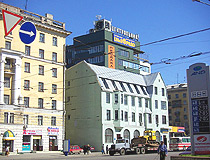
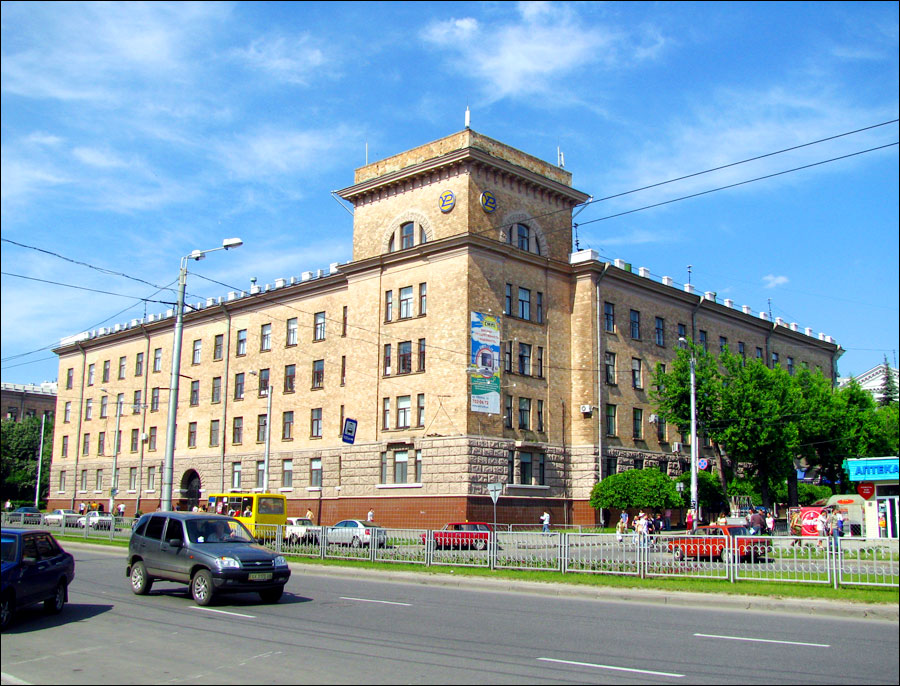
Sunny day in Kharkiv
Author: Andrey Kholmanskiy
Kharkiv - Features
Kharkiv is located in the north-eastern part of Ukraine in close proximity to the border with Russia (about 35 km), on the border of two landscape zones - forest-steppe and steppe. The climate in the city is temperate continental; winters are cold and snowy, summers are hot. The average temperature in January is minus 4.6 degrees Celsius, in July - plus 21.3 degrees Celsius. The City Day of Kharkiv is celebrated on August 23.
The emblem of Kharkiv is similar to its historical coat of arms adopted at the end of the 18th century. It depicts a crossed cornucopia (filled with fruits and crowned with flowers) and a caduceus (a golden rod with silver wings) entwined with snakes. The cornucopia symbolizes natural wealth. Caduceus is an invariable attribute of the god Mercury, who in antiquity was considered the patron of merchants and travelers. The snakes symbolize wisdom.
This city is one of the largest industrial centers of Ukraine with enterprises of high-tech industries: power engineering, electrical industry, transport and agricultural engineering, instrument making, radio electronics, and the aerospace industry. Kharkiv also plays an important role in the military industry of the country.
Kharkiv is one of the largest transport hubs in Ukraine. A number of European transport corridors pass through this city. The international airport of Kharkiv, one of the largest in Eastern Ukraine, is located 12 km south of the city center. It offers regular flights to such cities as Berlin, Budapest, Dortmund, Kyiv, Prague, Vienna, Barcelona, Istanbul, Milan, Tallinn, Vilnius, Krakow, Lviv, Rome, Tel Aviv, Warsaw, and a number of others.
Public transport is represented by mini-buses, buses, trolleybuses, trams. The Kharkiv Metro has 3 lines with a total length of about 40 km. There are communities of all major world religions in Kharkiv. Most of the believing residents of the city profess Orthodox Christianity.
In terms of the level of education and science, Kharkiv universities and scientific institutions are among the best in Ukraine (and in some cases in Eastern Europe), often competing with those in Kyiv. The most famous education institution of the city is V. Karazin Kharkiv National University. After the Ivan Franko National University of Lviv, it is the oldest university in Ukraine.
Kharkiv is the largest city in the world located on the 50th parallel, larger than Krakow, Prague, Mainz, Ust-Kamenogorsk. In October 2010, the monument “The 50th Parallel” was opened in Shevchenko City Garden.
Barabashovo (or simply Barabashka, Baraban, Barik) is the largest in Ukraine and one of the largest in Eastern Europe industrial and clothing market occupying an area of more than 75 hectares (Akademika Pavlova Street, 165).
Kharkiv and the Kharkiv region are the world record holders for the number of cosmonauts. More than 30 local residents were enlisted in the cosmonaut detachment of the USSR and more than 20 of them flew into space. Such a large number of cosmonauts is explained by the fact that in Soviet times there were five higher aviation schools and one aviation institute in the city and the region.
Main Attractions of Kharkiv
Svobody (Freedom) Square - the main square of Kharkiv and the largest square in Ukraine. It is about five times larger than Red Square in Moscow. All significant and solemn events in Kharkiv, as a rule, take place here. You can get to Freedom Square by metro (University and Derzhprom stations).
The square has an unusual shape of a flask, the neck of which is closed by Sumska Street. The main architectural dominants are the State Industry House (1925-1928), also known as Derzhprom or Gosprom, and the main building of V. Karazin Kharkiv National University (1930-1932) - architectural monuments in the style of constructivism.
Derzhprom (Gosprom) - the main symbol of Kharkiv, one of the first Soviet skyscrapers. The height of the building is 63 meters, together with the TV tower - 108 meters. Today, it is a large office center.
Sumska Street - the main street of Kharkiv stretching from Constitution Square to Gorky Park. On this street there are a lot of old buildings of the late 19th and early 20th centuries. The street itself originated as a road to the town of Sumy in the 17th century.
The most notable buildings are the “Thermometer” house (Sumska Street, 1), Kharitonov’s tenement house (Sumska Street, 5), Kharkiv Drama Theater named after Taras Shevchenko (Sumska Street, 9), the building of the insurance company “Salamander” with antique columns and sculptures on the facade (Sumska Street, 17), the mansion of the merchants Aladins (Sumska Street, 44).
On this street there is also the Kharkiv National Opera and Ballet Theater (Sumska Street, 25), the Wedding Palace (Sumska Street, 61), as well as one of the main symbols of Kharkiv - the fountain “Mirror Stream” (Peremohy Garden Square).
Cathedral of the Intercession of the Holy Mother of God (1689) - the oldest surviving building in Kharkiv, an important monument of Ukrainian architecture of the second half of the 17th century. The cathedral is part of the complex of buildings of the Holy Intercession Monastery. Universytets’ka Street, 10/8.
Cathedral of the Assumption of the Blessed Virgin Mary (1771-1780) - a majestic architectural monument of national importance with a height of 89.5 meters, one of the most visited Orthodox sights of Kharkiv, located next to the Intercession Cathedral and built in the late (Catherine) Baroque style. Organ music concerts are regularly held in one of the halls of this cathedral. Universytets’ka Street, 11.
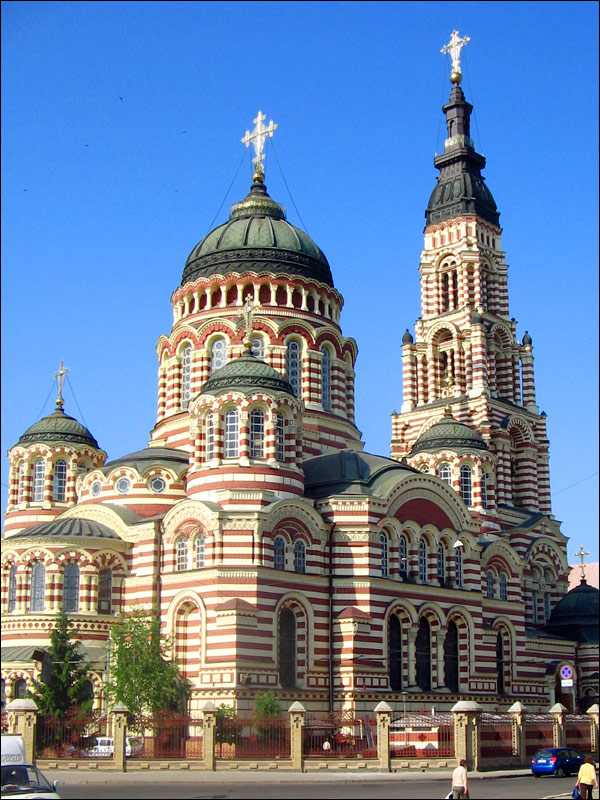
Cathedral of the Annunciation of the Blessed Virgin Mary (1888-1901) - one of the largest cathedrals in Eastern Europe located in close proximity to the previous two cathedrals, to the west of them, on the other bank of the Lopan River. The cathedral was built in the old Byzantine style and is distinguished by a special “striped” masonry. Blahovishchenska Square, 1.
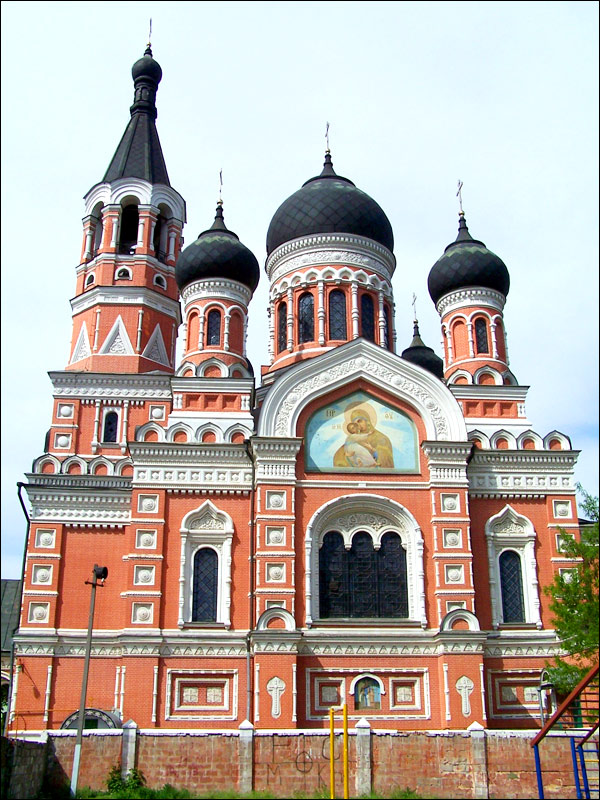
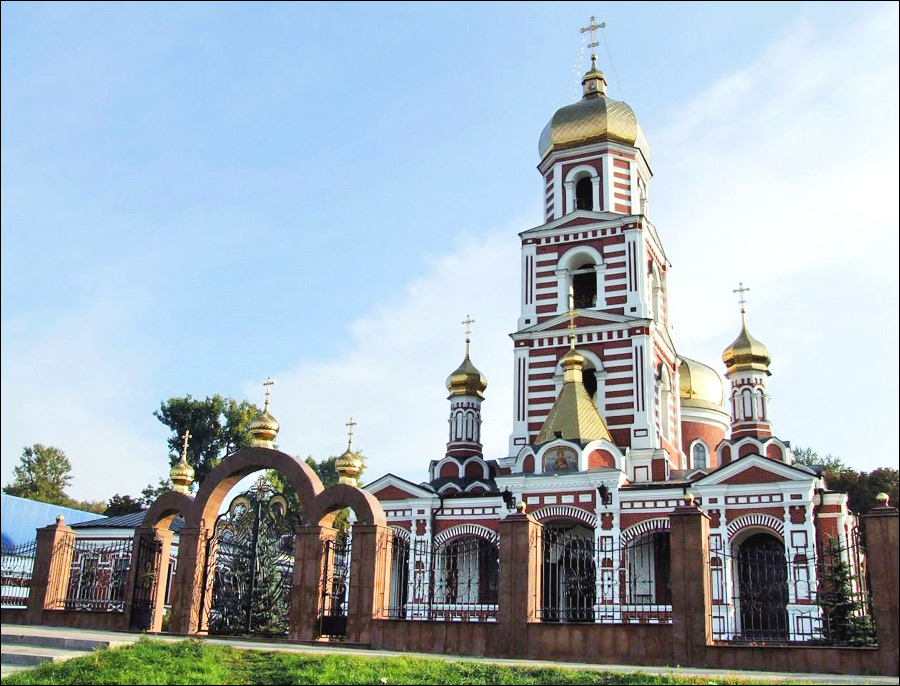
The most famous churches of Kharkov
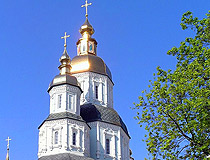
Intercession Cathedral in Kharkiv
Author: Taras Kushnirenko
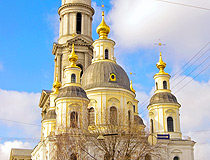
Assumption Cathedral in Kharkiv
Author: Sergey Vasilchenko
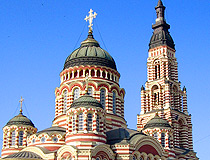
Annunciation Cathedral in Kharkiv
Author: Ivan Grab
Kharkiv Historical Museum named after M.F. Sumtsov - one of the largest museums in Ukraine with four major departments: primeval society, feudalism, capitalism, and the Soviet era. Its collection consists of archeological, ethnographic and numismatic collections, as well as an extensive book and document fund, photographs, periodicals, collections of flags, weapons, utensils, etc.
At the entrance to the museum, you can see a permanent exhibition of military equipment, the main exhibits of which are two British tanks Mark V (World War I). Universytets’ka Street, 5 (Constitution Square).
Kharkiv Fine Arts Museum - one of the largest collections of fine and applied arts in Ukraine. Today, works of pre-revolutionary Russian and Ukrainian art, art of the Soviet period, Western European art, and arts and crafts of the 16th-20th centuries are exhibited in 25 halls of this museum. Zhon Myronosyts Street, 11.
Maxim Gorky Central Park for Culture and Recreation - the main park of Kharkiv covering an area of more than 62 hectares, one of the best urban parks in Ukraine. The park is divided into several thematic zones: Children’s Park, Extreme Park, Family Entertainment Zone, French Park, Retro Park, Medieval Square, Sports Complex, Lake. There are a lot of different rides and sports grounds for children and adults, cafes, sculptural compositions, a Ferris wheel, and much more. Sumska Street, 81.
Kharkiv Cable Car - a transport system put into operation in 1971. It consists of 18 pillars and 124 double passenger cabins with a carrying capacity of 180 kg and connects Sumska Street (near the movie theater “Park” in Gorky Park) with the Pavlove Pole microdistrict. The length of the route is 1,387 m, the one-way trip takes 18 minutes, during which the passenger rises to a height of 8 to 26 meters above the ground, from where a picturesque view of the green park areas opens.
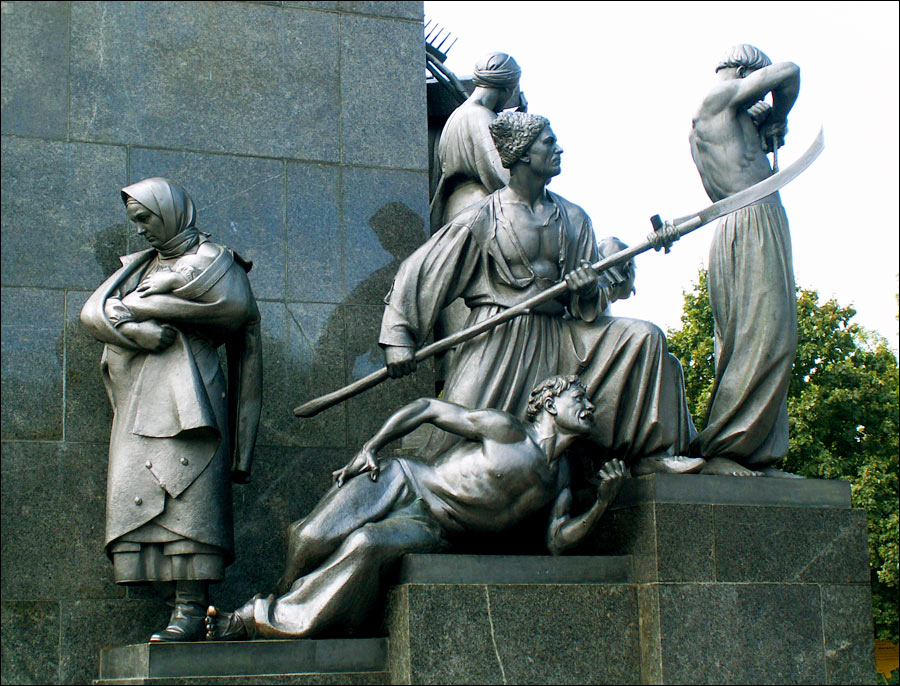
Shevchenko City Garden - one of the oldest parks in Kharkiv opened in 1804-1805 and located in the city center. Its main attraction is the majestic Taras Shevchenko Monument erected in 1935, which is considered the best embodiment of Shevchenko’s image in monumental art. Here you can also see a monument to a soccer ball, a monument to the 50th parallel (Kharkiv is the largest city on the 50th parallel of northern latitude), an old oak planted in 1775. Sumska Street, 35.
Sculpture Garden. In this small garden you can see sculptures of Leo Tolstoy, Fyodor Dostoevsky, Mikhail Bulgakov, Anna Akhmatova, Boris Pasternak, Vladimir Vysotsky, Ivan Bunin, Igor Talkov, and others. The garden is private property, but admission is free. There is a restaurant on site. Maksymilianivska Street, 20.










The comments of our visitors
All 8 comments