History of Lviv
Foundation of Lviv
Archaeological research confirms that settlements on the site of the present Lviv existed since the 5th century AD. In the 10th century, Kievan Rus and Poland began to spread their influence over these lands. The first mention of Lviv dates back to 1256. The town was historically the main center of Galicia, a region divided between Ukraine and Poland today.
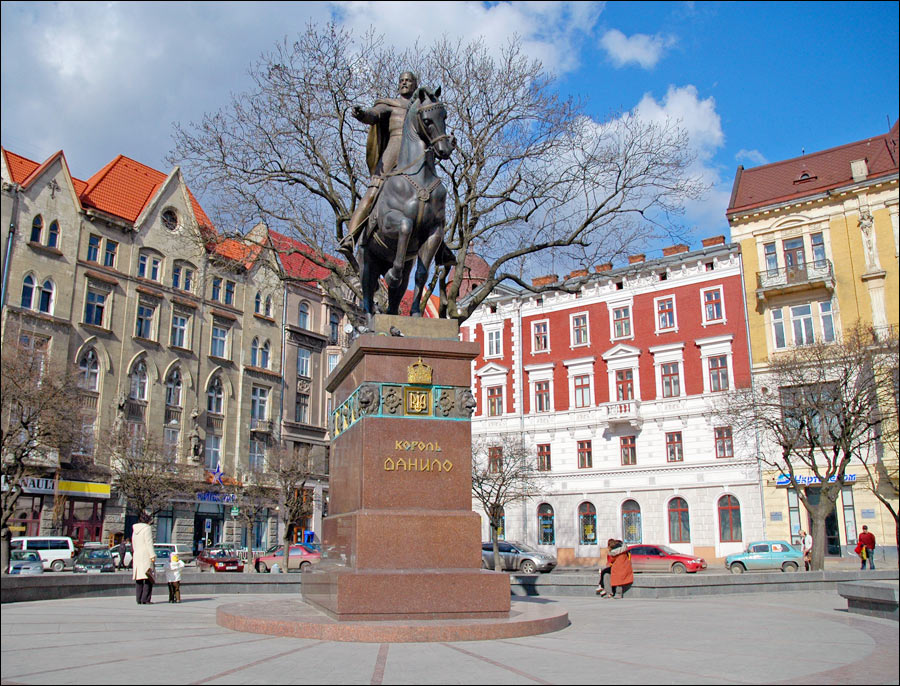
According to the most widespread version, Lviv was founded by the King Daniel of Galicia in the 13th century and was named after his son, Leo. According to another version, the town was founded by the son of Daniel of Galicia. A fortification was built on a hill called the Hill of the High Castle now.
In 1349, the Polish King Casimir III the Great captured Lviv. In 1356, he granted the town the Magdeburg law. Thanks to the favorable location at the intersection of trade routes from the ports of the Black Sea, Kiev, Eastern and Western Europe, Byzantium and the Baltic Sea ports, Lviv developed rapidly.
In 1370-1387, the town was part of Hungary. In 1379, Lviv got the right to have its warehouses, which dramatically increased the town’s attractiveness to merchants. In 1387, Lviv and the surrounding lands were captured by the troops of the Polish Queen Jadwiga.
More Historical Facts…
Lviv as part of Poland
As part of Poland (and later of the Polish-Lithuanian state), Lviv became the capital of the Russian Voivodeship. Over the next centuries, the town’s population grew rapidly. Lviv became a multinational town with a lot of religious confessions and an important center of culture, science, and commerce. The fortifications of Lviv were one of the most important fortresses that protected Rzeczpospolita from the southeast. Since the 15th century, monks of various orders began to arrive in Lviv.
Because of the expansion of the Ottoman Empire to Europe, the volume of trade through Lviv decreased significantly, which caused impoverishment of the town. In 1527, as a result of the fire, almost all buildings of Gothic Lviv were destroyed. The architects from Northern Italy were invited to restore the town, new buildings were constructed in the Renaissance style.
In 1608, the Jesuits founded the Jesuit collegium, which, in 1661, was transformed into the University of Lviv. In the first half of the 17th century, the population of Lviv was about 25-30 thousand people. During the 17th century, Lviv successfully withstood several sieges. In 1704, during the Great Northern War, the town was captured and plundered for the first time in its history by the army of Swedish King Charles XII. In 1707, the Russian Tsar Peter I visited Lviv. By the 18th century, there were about 40 different churches in Lviv and the town was called “civitas monachorum” - “the town of monks.”
Lviv in the Austro-Hungarian Empire
In 1772, as a result of the Third Partition of the Polish-Lithuanian Commonwealth, Lviv became part of the Habsburg Monarchy. The town became the capital of an Austrian province - the formally independent Kingdom of Galicia and Lodomeria. In 1777-1820, the town walls were demolished, new neighborhoods were built in the style of classicism. From 1772 to 1918, the town was officially called Lemberg. However, it continued to be an important center of Polish, Ukrainian, and Russian culture.
During the Austrian rule, science and culture developed actively in the town. Lemberg received two large theaters, street lighting, public transport, rail service. During this period, kerosene and a kerosene lamp were invented in this town, the world’s first liquid-fuel balloon was launched, the first reinforced concrete bridge in Europe was built.
At the beginning of the 19th century, the Austrian authorities began to Germanize the town. In 1805, the university was closed. In 1817, it was reopened, but became a purely German educational institution. In 1867, Galicia was finally granted wide self-government, both cultural and economic. The university was allowed to conduct lectures in Polish. Galicia became the only part of the former Poland, which received some cultural and political freedom.
As a result, Lemberg became the main center of Polish culture and politics. At the same time, the town served as an important center of the Galician-Russian movement. At that time, the bulk of present Ukraine was part of the Russian Empire. The town was also given the right to delegate representatives to the Parliament of Vienna, which attracted a lot of cultural and political figures. Lemberg became a meeting place for Polish, German, Jewish, Ukrainian, and Russian cultures.
Lviv between the First and Second World Wars
In August-September 1914, at the beginning of the First World War, the town was captured by Russian troops. In July 1915, it was again occupied by Austro-Hungarian troops. After the collapse of the Habsburg Empire, at the end of the First World War, Ukrainian politicians proclaimed Lviv the capital of the Western Ukrainian People’s Republic on November 1, 1918.
As the Ukrainian and Polish troops arrived in the town, hostilities began, as a result of which the Ukrainian units were forced to leave Lviv. The Polish-Ukrainian war continued until July 1919. During the Soviet-Polish war of 1920, Lviv was attacked by the forces of the Red Army, but they could not capture the town.
After the signing of the Riga Peace Agreement, Lviv remained part of Poland, the administrative center of the Lviv Voivodeship. The town quickly regained its position as one of the most important centers of science and culture in Poland. The majority of the population were Poles (more than 50%), the share of Jews was about 30%, Ukrainians - about 15%.
September 1, 1939, German troops attacked Poland and the Second World War began. September 19, 1939, Soviet troops approached Lviv and soon occupied its eastern part, the Polish side was asked to surrender the city. A few hours later, German troops attacked the west and south of the city. September 22, 1939, an agreement was signed and Lviv came under complete control of the Soviet Union.
June 30, 1941, after Germany’s attack on the USSR, Lviv was occupied by the Germans. During the German occupation, more than 200,000 people were killed in local concentration camps. July 27, 1944, the Soviet troops returned control of the city. Due to the fact that the main battle for Lviv unfolded in the southern suburbs, most of historical monuments, churches, and buildings were not damaged.
Lviv in the Ukrainian Soviet Socialist Republic
After the war, almost all Poles who lived in Lviv, more than 50 thousand people, was evicted mainly to the western part of Poland, to the former Germanic lands. A lot of them moved to Wroclaw. Soviet authorities began to suppress Ukrainian national movement. At the same time, the Ukrainian Greek Catholic church was abolished and turned into the Russian Orthodox church.
In 1950, the population of Lviv consisted of Ukrainians - 144,583, Russians - 90,379, Poles - 29,893, Jews - 18,614, others - 14,894. As a result of the Second World War, the national composition of Lviv was changed, traditional ethnic groups (Poles, Jews, and Germans) were moved or destroyed. The Polish language and its regional version practically disappeared. After Stalin’s death, Soviet policy became more tolerant and Lviv remained an important center of Ukrainian culture.
In the 1950s and 1960s, the city grew significantly both in population and in size. A lot of factories were founded and transferred from Eastern Ukraine. By the beginning of the 1980s, there were 137 large enterprises in Lviv that produced buses (for example, LAZ), forklift trucks, TVs (Electron), various instruments, programmed machines, and other products.
In Soviet times, Lviv remained an important cultural center of the Ukrainian SSR. In the late 1970s, there were five theaters, a philharmonic society, about 40 cinemas, a circus, 46 cultural centers, 12 large museums, and more than 350 libraries in the city.
During the Soviet period, the population of Lviv and the area occupied by the city increased significantly. In 1984, the city’s population was 760 thousand people.
April 3, 1990, the Ukrainian flag was raised over the town hall of Lviv. It was the first city of Ukraine where it was done.
In 1991, the USSR broke up into several independent states. Lviv became an outpost of the nationalist changes associated with this event.
Lviv in independent Ukraine
In independent Ukraine, Lviv has become a cultural and spiritual capital of the country. In 1998, the historical center of Lviv and the Cathedral of St. Jur were included in the UNESCO World Heritage List. In June 2001, Lviv was visited by Pope John Paul II. In 2006, the city celebrated its 750th anniversary.
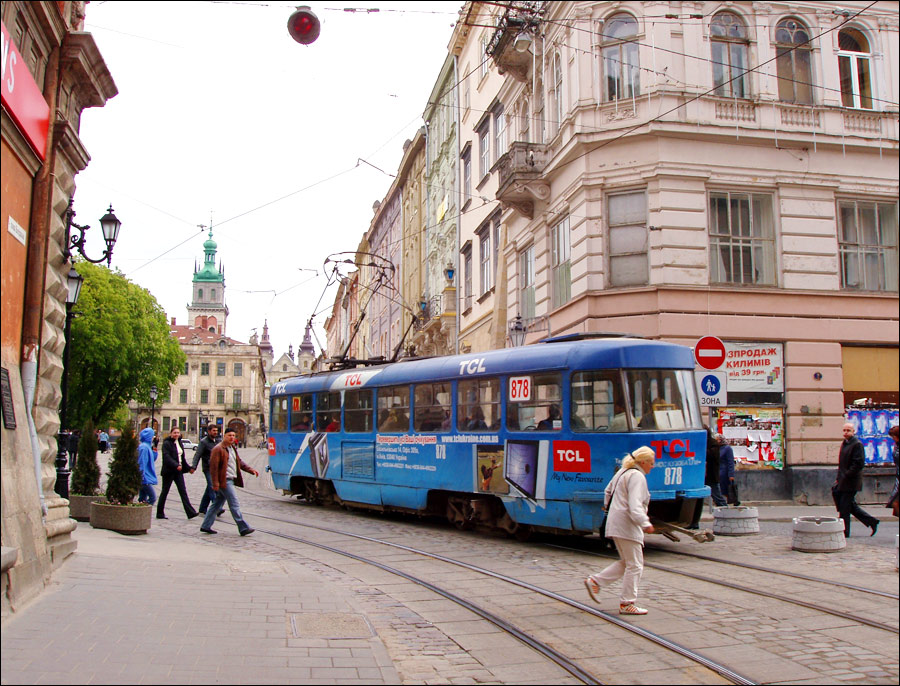
In 2011, the joint Ukrainian-German enterprise Electrontrans was opened - one of the largest producers of trolleybuses, trams, and electric buses.
In 2012, Lviv was one of the host cities of the European Football Championship. In 2016, the factories of Fujikura Automotive Ukraine Lviv LLC and Bader Ukraine were opened in Lviv to produce auto components for leading European automotive manufacturers.
Lviv streets
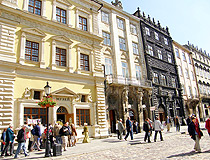
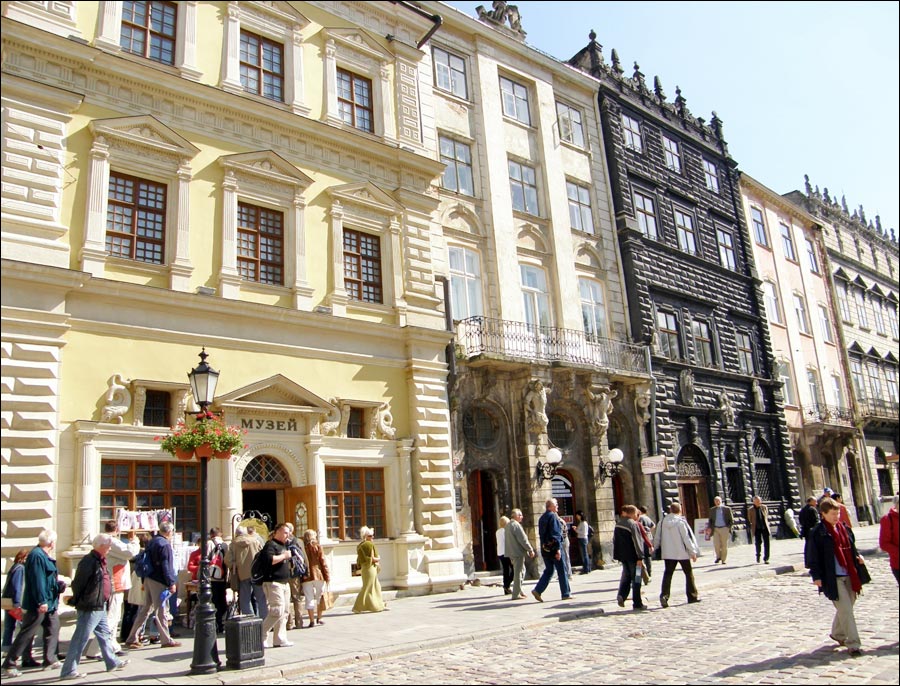
Black House (Kamenitsa) at Rynok Square in Lviv
Author: Marek Zdziechowski
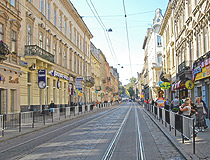
Street with tram ways in Lviv
Author: Kurylo Dmytro
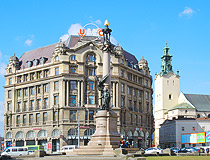
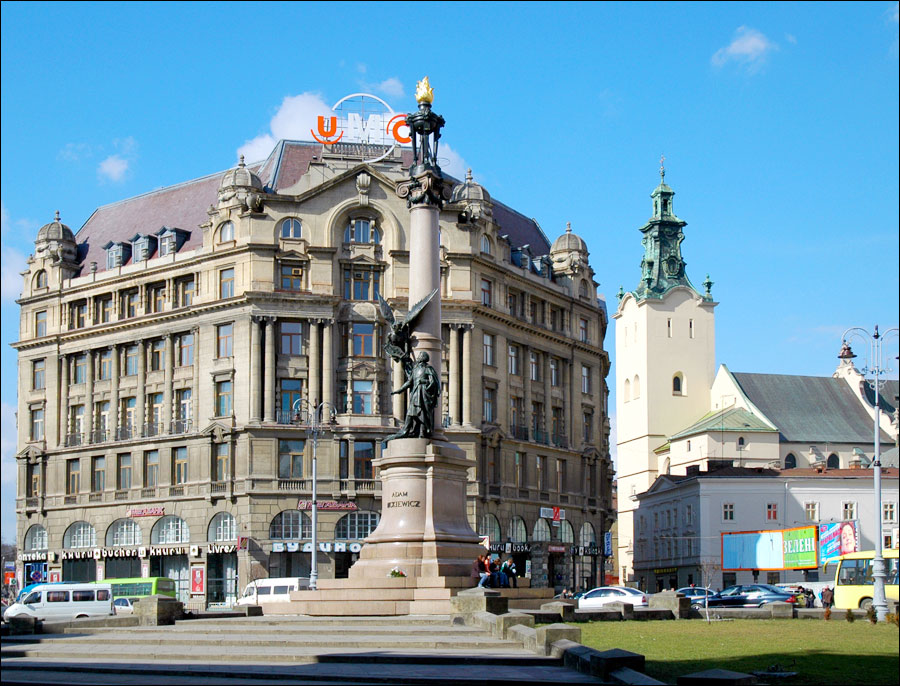
Adam Mickiewicz Square in Lviv
Author: Kurylo Dmytro
Lviv - Features
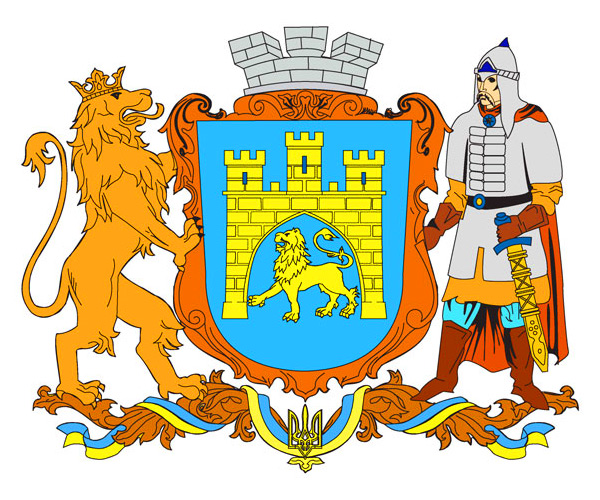
Throughout its history, Lviv has never been renamed. With regard to Lviv, you can hear a variety of epithets, the most famous of which are: “The City of the Lion” or “The City of Lions”, “The Royal City”, “The Pearl of the Crown of Europe”, “City-Museum”, “The Capital of Galicia”, “Little Paris” , “Little Vienna”, “Ukrainian Piedmont”, “cultural capital of Ukraine” and others.
Lviv is located in the central part of the Lviv region, about 600 km west of Kyiv and 70 km from the border with Poland. The climate in Lviv is moderately continental, humid. The average temperature in January is minus 3 degrees Celsius, in July - plus 19.5 degrees Celsius.
The city remains a significant industrial center of Ukraine. About 90% of the national production of lighting lamps is concentrated here, 100% of the production of forklift trucks, 11% of the production of buses. The last years are characterized by the development of tourism and the IT industry, which makes Lviv a major tourist and IT hub in Eastern Europe. Lviv has a well-developed tourist infrastructure. It is annually visited by more than 1 million tourists.
Lviv is one of the most important cultural centers in Ukraine. The city is known as the center of art, literature, music, and theater. More than 100 festivals are held annually. There are more than 50 museums and 10 theaters in Lviv. This city is also one of the most important centers of education in the country.
Lviv International Airport, located 6 km from the city center, offers flights to such cities as Vienna, Istanbul, Munich, Warsaw, Rome, Madrid, Kyiv. The motto of Lviv is the slogan “Lviv - Open to the World”.
The bicycle infrastructure is actively developing. Today, the city has more than 70 km of bicycle paths. Lviv is famous for its cafes, pastry shops, and restaurants. Compared with other large cities of Ukraine, Lviv has a lower crime rate. Lviv has more than 20 parks and green areas, 2 botanical gardens, and 16 natural monuments.
Most cafes, restaurants, and hotels offer free Wi-Fi. It is also available in the main squares of the city, at the airport and the train station.
The City Day of Lviv is celebrated on the 1st Saturday of May.
Main Attractions of Lviv
The historical center of Lviv is included in the UNESCO World Heritage List. The city has the largest number of architectural monuments in Ukraine. The architecture of Lviv, not badly damaged during the wars of the 20th century, includes a lot of European styles and trends of different historical epochs (Renaissance, Baroque, Classicism). The following are the most interesting sights.
Architectural and Historical Monuments
Rynok (Market) Square. The architectural ensemble of the main trade area of Lviv began to take shape on the model of European medieval towns in the 14th century. On four sides, the square is surrounded by 44 houses, different in construction time and style (Renaissance, Baroque, Empire). The building of the Town Hall, standing in the center of the square, is one of the symbols of Lviv. It is quite crowded place.
Town Hall. In its current classical forms the building was rebuilt in the beginning of the 19th century. Since 1939, the Lviv City Council has been located here. There are guided tours of the building with a visit to the 65-meter clock tower (408 steps). From the observation platform you can enjoy one of the best panoramas of Lviv. Rynok Square, 1. Opening hours: 9:00-17:00 (Saturday, Sunday - 11:00-19:00). Day off: Monday.
Black Kamenitsa (Black House) (1588-1589) - an impressive example of residential Renaissance architecture, one of the main architectural sights and symbols of Lviv. Initially, this building was not black, but under the influence of precipitation sandstone, from which the house was built, darkened. Today, the building is specially painted black. Inside there is a museum exposition devoted to the history of the liberation struggle of the Ukrainian people, as well as the history of the Ukrainian diaspora. Rynok Square, 8.
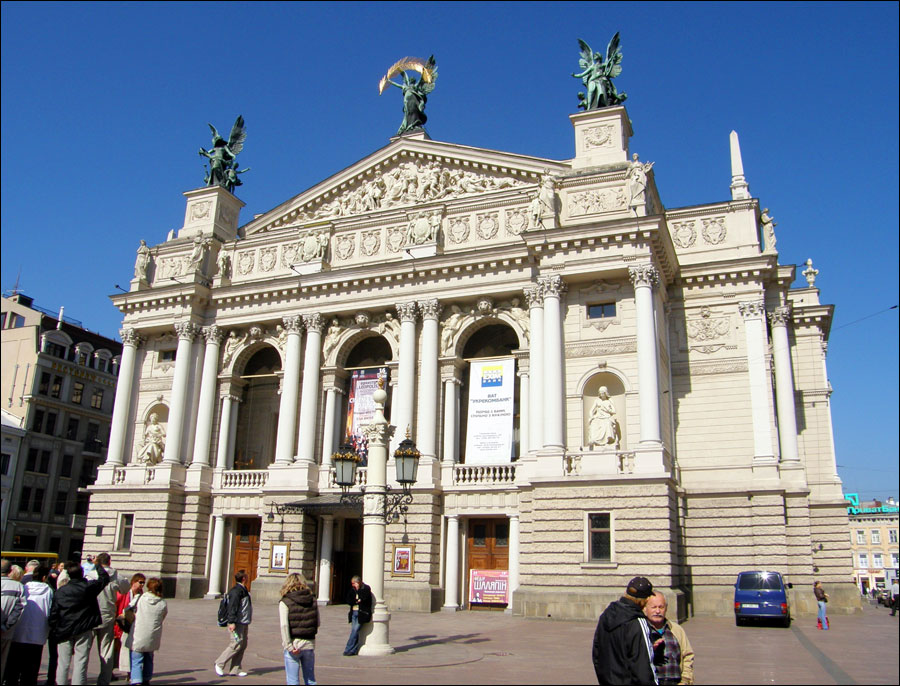
Opera House (1897-1900). The building of the Lviv National Academic Theater of Opera and Ballet named after Solomiya Krushelnytska is one of the most beautiful theaters in Europe along with the Odessa and Vienna operas. Svobody Avenue, 28.
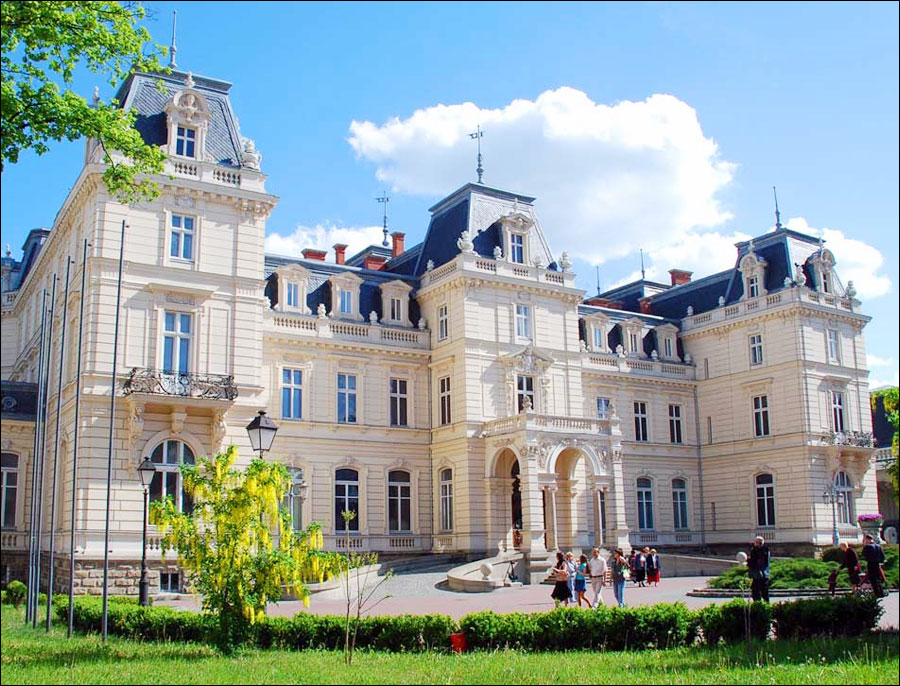
Potocki Palace (1888-1890) - the most luxurious palace of Lviv created for the influential Polish magnates Potocki. The palace is reminiscent of the French castles of the era of classicism. Inside you can see preserved interiors in the style of King Louis XVI. In the courtyard there is a park of miniature castles. The building houses the Museum of European Art. Mykoly Kopernyka Street, 15.
Royal Arsenal (1639-1643). The building was constructed in the Baroque style on the orders of the Polish King Wladyslaw IV. As a strategically important town, Lviv had two arsenals. Since 1939, the building houses the Lviv Regional State Archive. In front of the building there is a small second-hand book market where you can buy old books, antiques. Pidvalna Street, 13.
Porokhova (Powder) Tower (1554-1556) - a fully preserved fragment of Lviv’s defensive structures, one of the 17 towers that were part of the town fortifications. It is a monument of military-defense architecture of the Renaissance. Since 1959, the building is occupied by the House of the Architect with an exhibition hall. Pidvalna Street, 4.
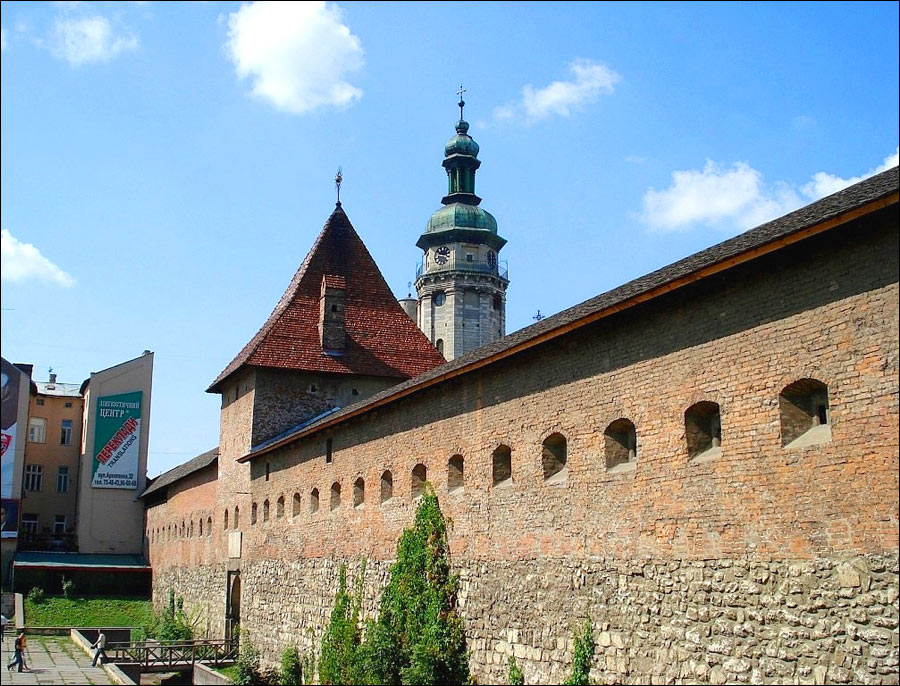
Hlynyans’ka Gate - the most preserved part of fortifications of medieval Lviv. The building in the style of the late Renaissance is part of the fortification complex of the Bernardine monastery. The gate was built in the beginning of the 17th century. Volodymyra Vynnychenka Street, 3.
Citadel. This picturesque complex of fortifications was built in the middle of the 19th century. The complex did not play a significant role during the world wars, thanks to which it was perfectly preserved. Akademika Kolessy Street, 14.
Lviv Railway Station (1904). The main railway station of Lviv is also called the “Palace”. Historically it is the oldest train station on the territory of Ukraine. The first train arrived in Lviv in 1861. Dvirtseva Square, 1.
Architecture of Lviv
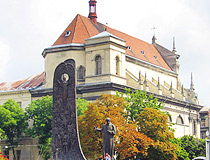
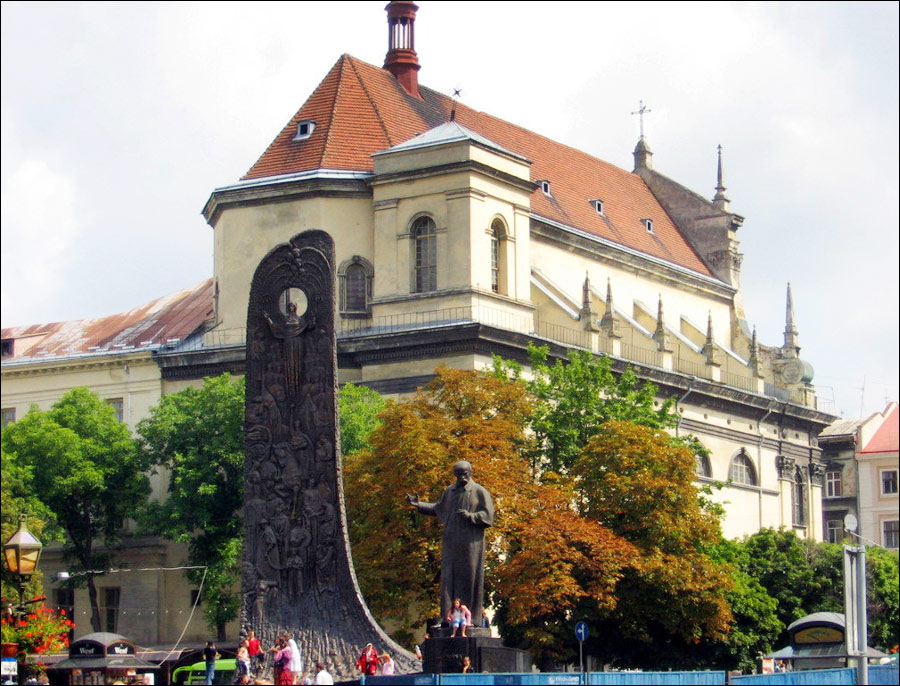
Monument to Taras Shevchenko in Lviv
Author: Grzegorz Krasnodebski
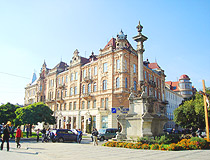
Beautiful architecture of Lviv
Author: Shumsky A.
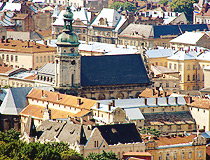
Picturesque roofs of Lviv
Author: Eugen Shovhun
Churches
Lviv Latin Cathedral (1360-1493) - the main Roman Catholic church in Lviv. It was built and rebuilt by Lviv city planners for 400 years. The first stone was laid by the Polish King Kazimierz the Great in 1360. After the restoration of 1760-1778, the Gothic forms of the cathedral were transformed into the Baroque ones. Katedralna Square, 1.
Chapel of the Boim Family (1609-1615) - one of the most remarkable architectural monuments of Lviv. The chapel was built over the family crypt of Lviv patricians Boim. The western facade is striking in its richness of decorative design. The dome is crowned with an unusual sculpture of the seated Christ. Katedralna Square, 1. Opening hours: 11:00-17:00. Day off: Monday.
Church of the Holy Communion (1745-1764) - one of the most significant baroque monuments in Lviv. In the dungeons, a part of the collection of monuments of sacral art of the Lviv Museum of the History of Religion is on display. There are concerts of organ music. Muzeina Square, 1. Opening hours: 10:00-18:00. Day off: Monday. Concerts: Sunday, 15:00.
St. George’s Cathedral (1744-1770) - one of the most beautiful architectural ensembles of Lviv, the pearl of the Ukrainian Baroque, the main shrine of the Ukrainian Greek Catholic Church. In 1998, this cathedral along with the ensemble of the historic center of Lviv was included in the UNESCO World Heritage List. Ploshcha Svyatoho Yura, 5.
Armenian Cathedral of Lviv (1363-1370). The buildings of the cathedral form a picturesque “Armenian courtyard”. This cathedral has a lot of similarities with the cathedral in the ancient Armenian capital of Ani. Virmens’ka Street, 7/13.
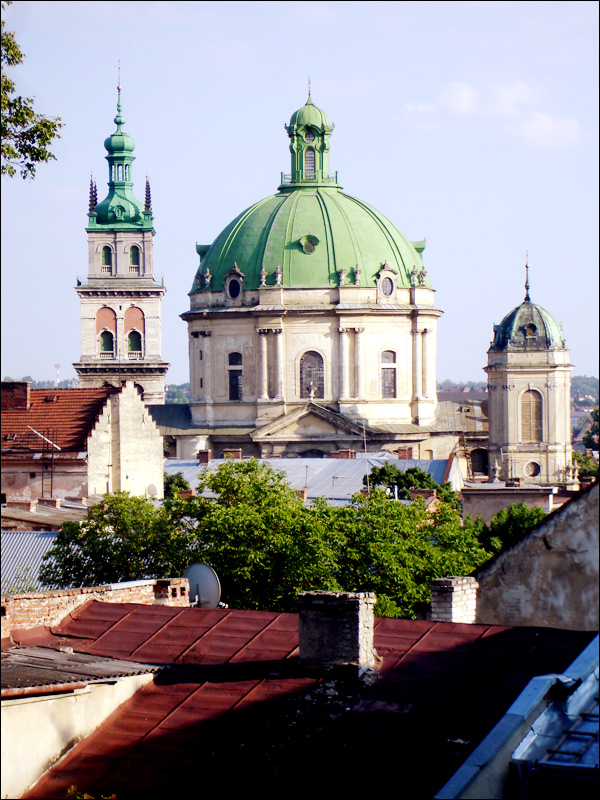
Dormition Church - an outstanding monument of the Renaissance architecture of Galicia. The construction of the church began in the 15th century and lasted more than four decades. The bell tower (66 m), built in 1572, is called the Korniakt Tower in honor of the Greek merchant and philanthropist who patronized Orthodoxy in Lviv. Ruska Street, 5/7.
Bernardine Monastery and Church (1600-1630). In the 17th century, the monastery complex was a separate fortification connected to the ring of town walls. Soborna Square, 3?.
Jesuit Church (1610-1630) - one of the largest religious buildings of the city, a great example of the early Baroque in Lviv. Teatralna Street, 13.
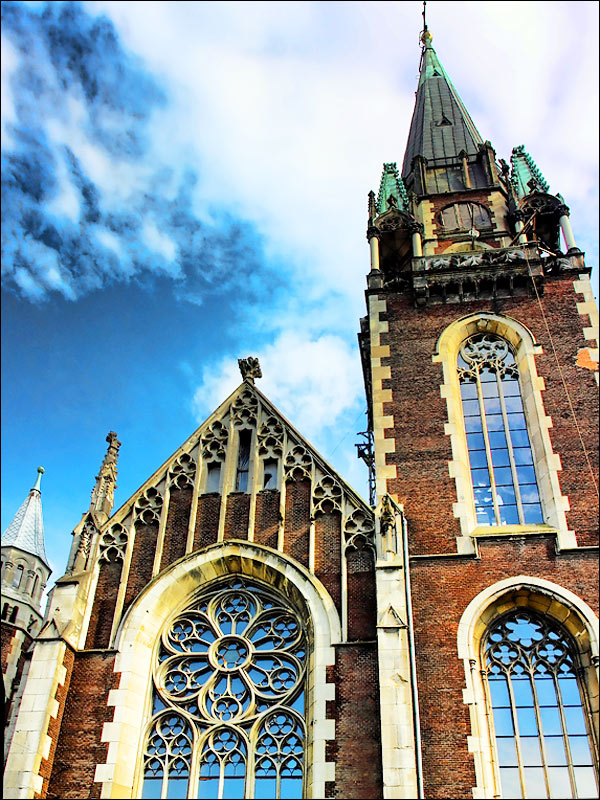
Catholic Church of Sts. Olha and Elizabeth (1903-1912) - the highest church in Lviv (85 meters) built with elements of French and North German Gothic architecture, one of the most beautiful churches in the city. Kropyvnyts’koho Square, 1.
Museums
Museum of Folk Architecture and Rural Life. The museum is located on a large territory on the wooded hills in the eastern part of Lviv. It is divided into six ethnographic zones representing the life of different nationalities of Western Ukraine. In total, there are more than 120 monuments of architecture: 6 churches, houses, smithy, school, sawmill, cloth, water and windmills. The oldest exhibit is the peasant hut of 1749. Chernecha Hora Street, 1. Opening hours: 10:00-18:00. Days off: Monday, Tuesday.
Arsenal Museum (1554-1556) - part of fortifications of medieval Lviv. The museum has one of the best in Ukraine collections of weapons from dozens of countries around the world. Here you can see exquisite Arabian sabers, heavy European two-handed swords, armor of Polish “winged hussars”, cannons with coats of arms and mottos, and much more. There is an antique salon. Pidvalna Street, 5. Opening hours: 10:00-17:30. Day off: Wednesday.
Lviv Historical Museum (1580). The museum building, known as the House of Kornyakt, is a jewel of the residential renaissance architecture of Lviv. Inside you can find the Italian courtyard with a sculpture exhibition, cafe, and antique shop. The exposition “Royal Chambers” presents a collection of jewelry, paintings, antique furniture, and dishes. Rynok Square, 6. Opening hours: 10:00-18:00. Day off: Wednesday.
Lychakiv Cemetery - a historical and memorial museum-preserve located near the center of Lviv, looking like a landscape park. Officially, the cemetery was founded in 1784, although it existed since the 16th century. On the territory of 40 hectares there are about 3,500 monuments and compositions made by famous sculptors and architects. Mechnykova Street, 33.
Andrey Sheptytsky National Museum has a rich collection of works of Ukrainian medieval sacred art: icons, books, graphics, sculptures, folk art. Taking pictures is not allowed. Svobody Avenue, 20. Opening hours: 10:00 -18:00. Day off: Monday.
Pharmacy Museum - the first pharmacy in Lviv opened on the corner of Rynok Square in 1735. The Museum of Pharmaceutical History was opened here in 1966, more than 3,000 exhibits are presented. Without a guide, visiting the museum is not recommended. Stavropihiiska Street, 3. Opening hours: 9:00-19:00 (Saturday, Sunday - 10:00-18:00).
Lviv National Art Gallery - the largest art museum of Ukraine with more than 62 thousand exhibits. In 24 halls you can see about 400 works of art created by French, Austrian, German, Polish, Russian, and Ukrainian masters. Stefanyka Street, 3. Opening hours: 11:00-18:00, day off - Monday.
Museum of Ethnography and Crafts. The museum occupies a neo-Renaissance building on the main street of Lviv. At the base of the dome you can see a sculptural group symbolizing the economic prosperity of Galicia, which is called the only sitting statue of Liberty in the world. The exposition presents a rich collection of ceramics, porcelain and faience, art glass products. The collection of ancient clocks of the 16th-20th centuries has about 350 exhibits. Svobody Avenue, 15. Opening hours: 11:00-17:00. Day off: Monday.
Museum of Brewery. Here you can learn more about the old technology of beer production, see collections of beer barrels and bottles, beer mugs, advertising samples, technological books, and other unique documents. At the end of the tour, you can also take part in beer tasting. Kleparivska Street, 18. Opening hours: 10:00-19:00.
Lviv places
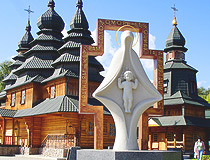
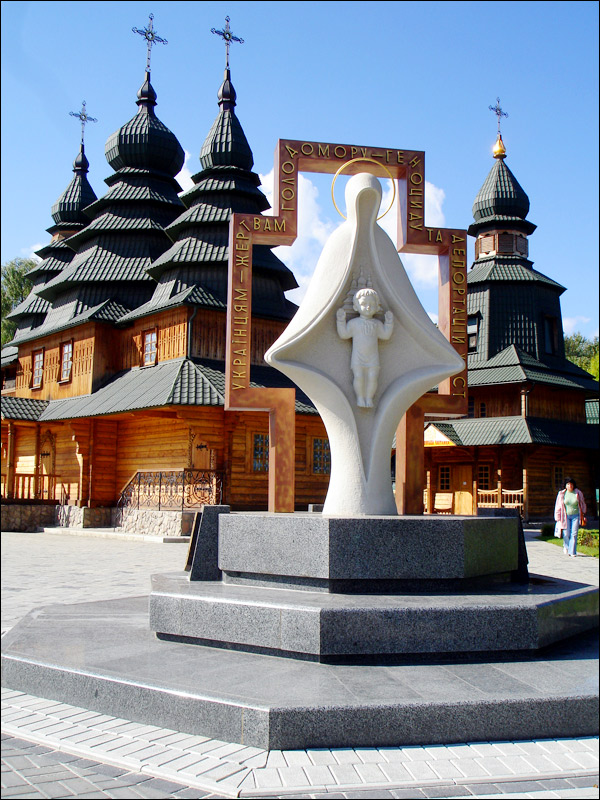
Memorial to Victims of the Holodomor in Lviv
Author: Nick Falafivka
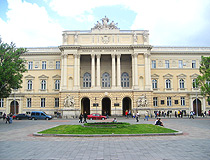
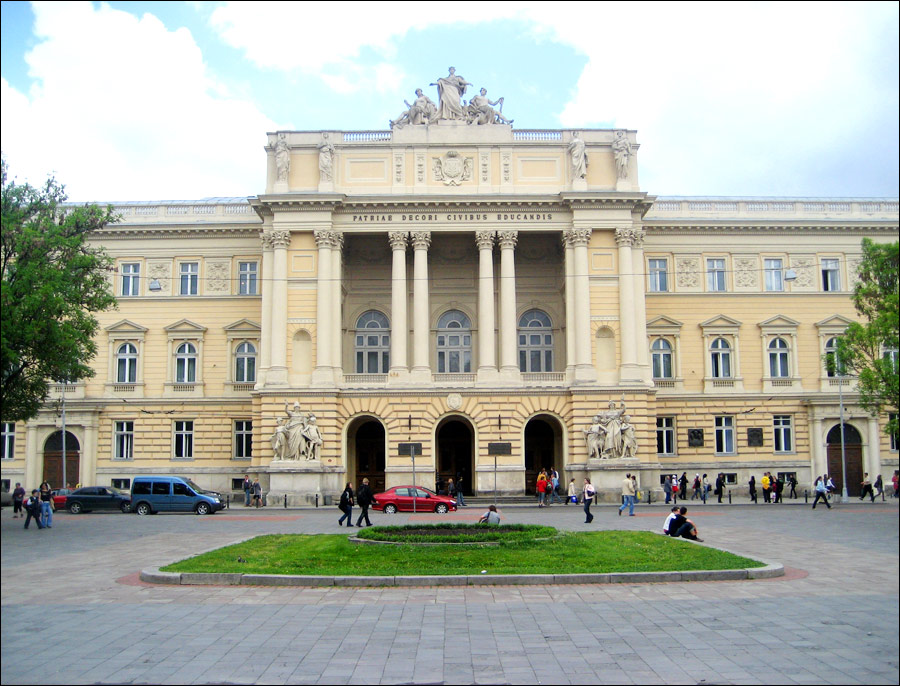
Ivan Franko National University of Lviv
Author: Tiberiu Muntean
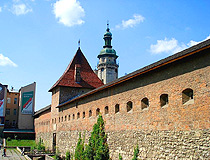
Hlynyanska Gate in Lviv
Author: Konstantin Golovan
Other places of interest
Svobody (Liberty) Avenue - the central, most elegant and prestigious street in Lviv. This street is characterized by architectural eclecticism with features of classicism, neo-Renaissance and Baroque. The avenue with an alley in the middle starts from the Lviv Opera House and ends at Adam Mickiewicz Square. This is a great place for walking.
High Castle Park. This popular park located on a hill in the center of Lviv offers great views of Lviv. The park was laid out on the site of the old castle, the place where the town was originally founded in the 13th century. A long staircase leads to the top of the hill. Zamkova Street.
Ivan Franko National University of Lviv (1877-1881) - one of the leading universities in Ukraine and one of the oldest universities in Europe. It was founded by decree of King of Poland John II Casimir in 1661. Today, more than 10 thousand students study at 18 faculties here. There is a museum of history of the Lviv University. Universytetska Street, 1.
Stryiskyi Park - one of the oldest and most beautiful parks in Lviv, a monument of landscape art of national importance. Before the Second World War, it was considered one of the most beautiful parks in Poland. The park, designed by the famous architect Arnold Rohring in 1876-1877, occupies an area of 56 hectares. The Lviv Children’s Railway can be found here. The park is located between Stryiska and Ivana Franka streets.
Arena Lviv. This stadium, opened in preparation for the Euro 2012, is one of the newest stadiums in Europe. It can accommodate up to 35 thousand people. Guided tours of the stadium may be of particular interest. Stryiska Street, 199.
House of Organ and Chamber Music. Catholic Church of St. Mary Magdalene was founded by Dominican monks in 1600. It was renovated and received its current form in 1870. The architecture of the building combines elements of the Baroque and Renaissance styles. The church has the largest organ in Ukraine made by the Czech company Rieger-Kloss in 1932. Stepana Bandery Street, 8.












The comments of our visitors