History of Vinnytsia
Foundation of Vinnytsia
People began to settle on the territory of today’s Vinnytsia in ancient times. Archaeologists have found here tools of the late Neolithic era (about 25 thousand years ago), burials of the Bronze Age (3-5 thousand years ago), early Slavic settlements of the Chernyakhov culture (100-500 AD).
In the 9th century, the tribes of the Uliches and Tivertsi, which were part of Kievan Rus’, settled here. Over time, this region became part of the Galicia-Volhynia Principality (1199-1253). In the middle of the 13th century, as a result of the Mongol invasion, this territory came under the control of the Golden Horde and the Kingdom of Galicia-Volhynia (1253-1349) became its vassal.
In 1362, after the victory of the combined Lithuanian-Russian army headed by Algirdas, the Grand Duke of Lithuania, over the army of the Golden Horde in the Battle of Blue Waters, most of today’s Ukraine (including the sparsely populated Podolia and the Northern Black Sea region) came under the control of the Grand Duchy of Lithuania.
The nephews of Algirdas, Fyodor and Konstantin Koryatovich (Koryatowicz), began to build fortified settlements on these newly conquered lands. According to the existing historiographic tradition, the founding date of Vinnytsia is considered to be 1363, when Fyodor Koryatovich allegedly laid a wooden fortress on a high cliff below the confluence of the Vinnychka River into the Southern Buh. In 1393, the first Vinnytsia headman was appointed.
Except for the listing in the chronicle “The List of Russian Towns, Near and Far” of the end of the 14th century, where it is mentioned under the name “Venichya”, the first written mention of Vinnytsia dates back to 1396.
More Historical Facts…
Vinnytsia in the 15th-18th centuries
From 1400 to 1569, this small wooden fortress was attacked dozens of times by the Crimean Tatars and destroyed several times. These raids were sometimes quite massive. In 1575, for example, about 50 thousand people were taken into slavery in Podolia, Volhynia and Galicia, 150 thousand horses, 500 thousand heads of cattle, 200 thousand sheep were stolen.
According to the Union of Lublin (1569), this region, including Vinnytsia, became part of a federal state that united the Kingdom of Poland and the Grand Duchy of Lithuania and was known as the Commonwealth. In 1598, the town became the center of the Bratslav Voivodeship of the Kingdom of Poland.
Vinnytsia was often mentioned in the events of the Khmelnytsky Uprising (the Cossack-Polish War) of 1648-1657. Under the terms of the Treaty of Zboriv of 1649, it was included in the lands of the Ukrainian Cossack state known as the Zaporizhian Host. The border line was drawn west of Vinnytsia and Bratslav.
According to the Truce of Andrusovo (1667) between the Tsardom of Russia and the Polish-Lithuanian Commonwealth, Vinnytsia, like the entire territory of the Right-Bank Ukraine, remained under Polish rule. However, the weakened Commonwealth was unable to resist the Ottoman Empire, and according to the Treaty of Buchach of 1672, it gave the Ottomans a significant part of the Podolia, Bratslav and Kyiv voivodeships. In 1686, the Commonwealth regained these lands.
Throughout the 18th century, the Right-Bank Ukraine was shaken by Cossack-peasant uprisings. Vinnytsia was several times taken by detachments of rebelling Cossacks. According to the census of 1764, there were 309 households in Vinnytsia, including 66 belonging to various monasteries.
As a result of the second partition of the Commonwealth (1793), Vinnytsia came under the control of the Russian Empire. In 1793-1796, it was the center of the Bratslav Province, in 1796-1797 - the center of the Bratslav Governorship. In 1797, administrative-territorial reorganizations reduced its status to the level of a county town.
Vinnytsia in the 19th - 20th centuries
In 1864, about 10.5 thousand people lived in Vinnytsia; there were 5 schools, a hospital, a theater, and 190 shops. In 1870, the Kyiv-Odesa railway passed near it. Thanks to this railway communication with Kyiv, Odesa, Moscow, St. Petersburg was significantly improved and the rapid economic growth of Vinnytsia began.
In 1878, the population of Vinnytsia was already 23,591 people (Orthodox - 32.0%, Jews - 58.5%, Catholics - 9.5%); factories and industrial establishments - 16 (2 breweries, 2 soap factories, 1 candle and tallow factory, 1 yeast factory, 1 tobacco factory, 5 brick and tile factory, 1 copper and cast iron foundry, 2 printing houses and 1 photo studio). In 1897, 30,563 people lived in Vinnytsia, including 11,456 Jews, 10,862 Ukrainians, 5,206 Russians, and 2,173 Poles.
With the outbreak of the First World War in 1914, Vinnytsia became the administrative center of the Podolia Governorate. During the Civil War on the territory of the former Russian Empire, power in Vinnytsia repeatedly changed hands. The government of the Ukrainian People’s Republic worked in the city for some time and Vinnytsia was the temporary capital of the country. Soviet power finally established itself in Vinnytsia on June 19, 1920. In 1932, Vinnytsia became the administrative center of Vinnytsia Oblast. In 1939, the population of the city was about 93,000 people.
On July 19, 1941, during World War II, German troops occupied Vinnytsia. From July 16, 1942 to March 15, 1944, one of Hitler’s headquarters under the name “Wehrwolf” was located about 8 kilometers north of Vinnytsia. Hitler visited this place three times and spent about 5 months there. During the German occupation, about 41 thousand locals were killed, mostly Jews. About 13,400 people were sent to forced labor in Germany.
On March 20, 1944, the Red Army re-established Soviet control over Vinnytsia. During the war, the number of residents of the city decreased from 100 to 27 thousand people, only 10 out of 50 industrial enterprises survived, 1,880 residential buildings were completely destroyed.
By the end of 1948, the industry of Vinnytsia was almost completely restored. In subsequent years, food industry (oil and fat, canned fruits, and meat), light industry (shoe, clothing, knitwear, haberdashery and other factories), chemical (chemical plant), machine-building, and metalworking industries developed in Vinnytsia. From 1959 to 1989, the population of Vinnytsia increased from about 122 to 374 thousand people.
With the proclamation of Ukraine’s independence in 1991, Vinnytsia became the third city in the country in which a blue-and-yellow flag was hoisted on the main square with the official consent of the local authorities.
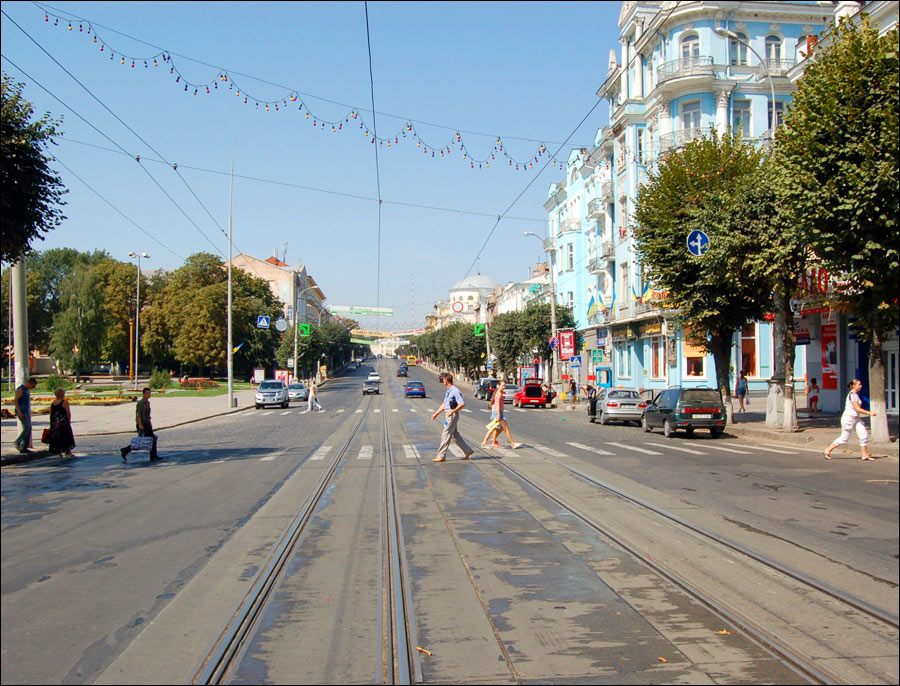
Streets of Vinnytsia
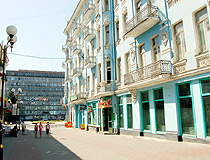
Architecture of Vinnytsia
Author: Andre Michel
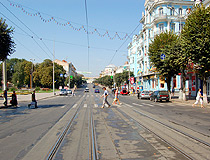
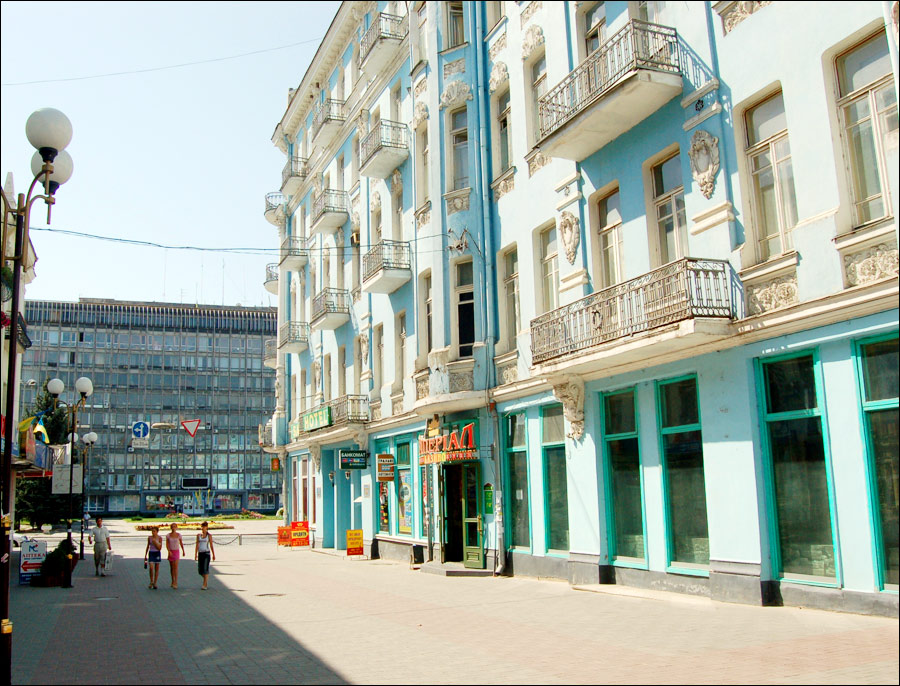
In the center of Vinnytsia
Author: Andre Michel
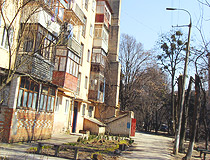
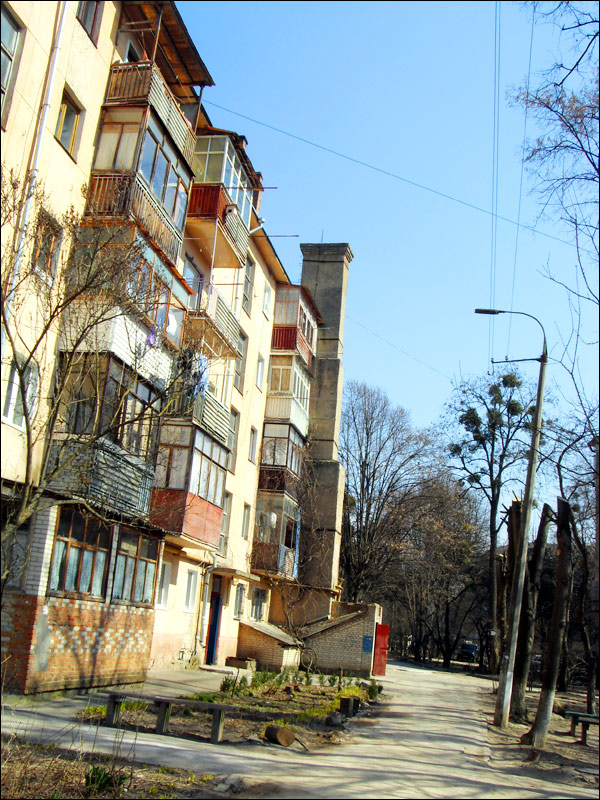
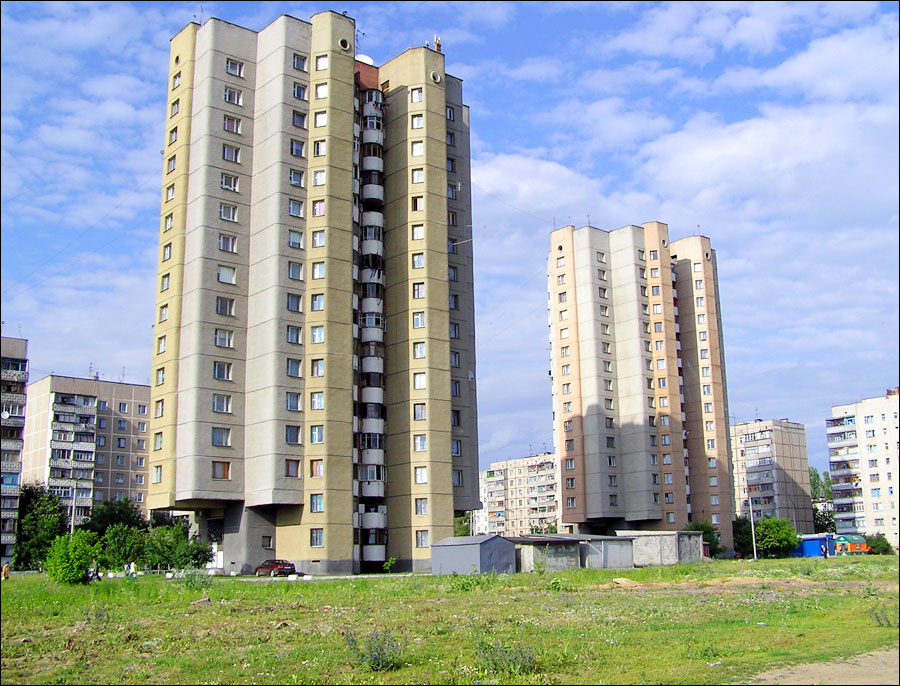
In the courtyard of an apartment building in Vinnytsia
Author: Leshenko Sergey
Vinnytsia - Features
There are several versions of the origin of the name of Vinnytsia. According to one of them, it originates from the Old Slavonic word “veno” (bride-dowry), which doesn’t fit with the history of the founding of the town. There are other similar Old Slavonic words: “vin” - brother, relative, accomplice, “vina” - river, tributary, “vincha” - harvest festival. According to another version, the name comes from the word “vinokurnya” (distillery). Also there is a river called Vinnychka flowing within the city limits.
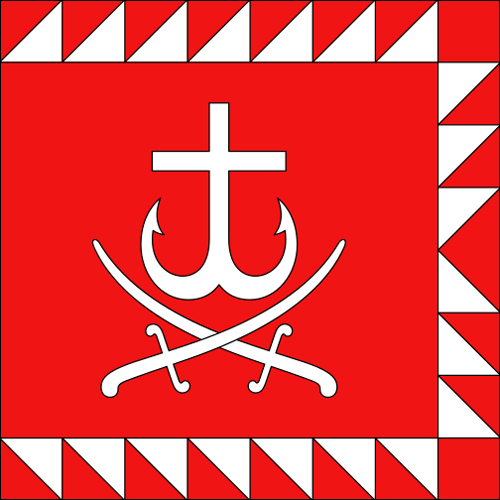
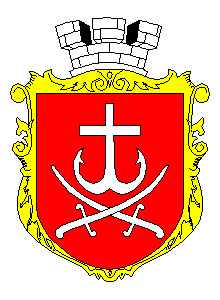
In general, the coat of arms of Vinnytsia, adopted in 1993, repeats its historical coat of arms of the middle of the 17th century with a cross, turning into two hooks and two crossed sabers, symbolizing the then border position of the town.
The Ukrainian magazine “Focus” declared Vinnytsia the best city to live in Ukraine according to the results of the 2013 rating. In 2015 and 2017, Vinnytsia topped a similar rating compiled by the sociological group “Rating”. The City Day of Vinnytsia is celebrated on the second Saturday of September.
Vinnytsia is located in the temperate climate zone. The city is characterized by long cool, rather humid summers and relatively short mild winters. The average temperature in January is minus 4.1 degrees Celsius, in July - plus 19.2 degrees Celsius.
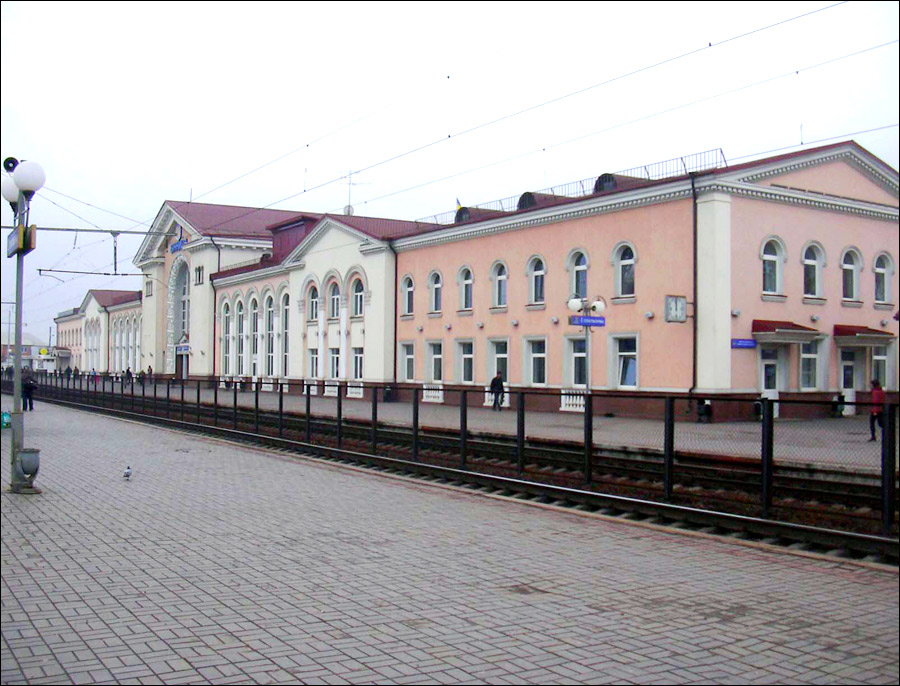
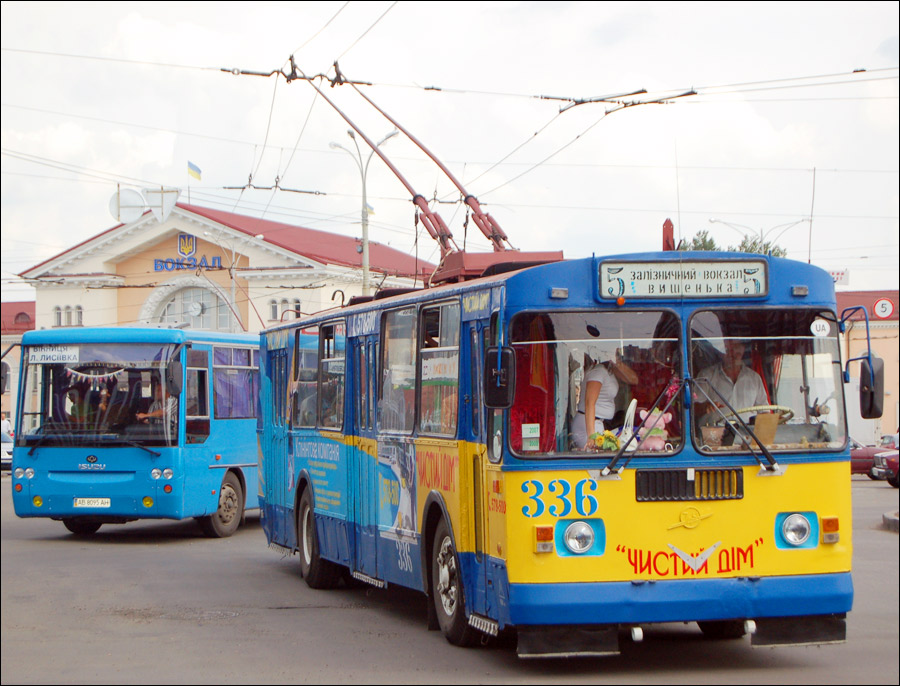
Public transport of Vinnytsia is represented by trams, trolleybuses, buses, mini-buses. Trams and trolleybuses run from 5.30 to 24.00. In 2016, Vinnytsia ranked first in Ukraine in terms of the quality of city roads and third in terms of the comfort of public transport. Recently, electric scooters have appeared in the city. There are a lot of bike paths in Vinnytsia, and it is relatively well adapted for cycling or scooter riding. The most convenient way to get to Vinnytsia is by train. There are direct trains from Kyiv, Kharkiv, Lviv, Uzhhorod, Odesa available.
The development of the historical center of Vinnytsia is characterized by a number of interesting trends and features. “Jerusalem” (the Jewish quarter) is an example of the so-called “Jewish urban baroque” inherent in Eastern Podolia, which began to form at the end of the 18th century.
In the 1910s-1930s, such architectural styles as Art Nouveau and Constructivism were used in urban housing and public architecture. The list of monuments of architecture and urban planning of Vinnytsia includes more than 100 objects, of which 11 are of national importance.
Main Attractions of Vinnytsia
Light and Music Fountain ROSHEN - a fountain installed in the riverbed of the Southern Buh River near Kempa Island in 2011, the main symbol of Vinnytsia. This is the largest floating fountain in Ukraine and Europe. A unique feature of this fountain is that it is submerged during the winter.
Using a laser projector and a screen, which consists of a water-air mixture distributed along the entire length of the fountain, makes it possible to demonstrate 3D video. The length of the fountain is 97 m, the width - 10 m, the height of the central jet - 65-70 m. The fountain was built at the expense of the charitable foundation of Petro Poroshenko, the fifth president of Ukraine (June 7, 2014 - May 20, 2019).
Light and music water shows are held in the evenings, during the warm season (from April to October) every day. Every evening, from about 9 pm, they show three different performances of 20 minutes each. You can watch the show from the 700 meters long well-maintained promenade.
Vinnytsia Water Tower (1912) - a very picturesque historic brick building 28 meters high standing on European Square. In the past, this water tower was also used as a fire tower, for which the upper tier was adapted. After World War II, the tower lost its original purpose and was converted into a residential building. The families of workers of the city water utility lived in it.
In 1985, the tower was reconstructed and became a branch of the Vinnytsia Local History Museum. Today, it is the Museum of memory of soldiers from Vinnytsia, who died in the Afghan war (1979-1989). In 2000, according to the decision of the Vinnytsia city council, the tower was included in the list of city symbols. You can climb to the top of the tower and enjoy the views of Vinnytsia. The Podolia Tourist Information Center is also open here. Mykoly Ovodova Street, 20.
National Pirogov’s Estate Museum - a museum complex devoted to the life of an outstanding surgeon (the founder of field surgery and anesthesia), scientist and teacher Nikolai Ivanovich Pirogov (1810-1881), located in his former estate “Vishnya” (“Cherry”) on the southwestern outskirts of Vinnytsia.
Here you can see his house; museum-pharmacy with the interiors of the reception and operating room; necropolis church, where his embalmed body rests (1.5 km from the museum); a memorial park with the trees planted by Pirogov.
The exposition in the house consists of personal belongings, paintings, surgical instruments, installations, diplomas, newspaper clippings, etc. It covers all stages of his life - studying and teaching at universities, discoveries and scientific work, participation in the Crimean, Caucasian and Balkan wars, guardianship in the Kyiv and Odesa regions, and, finally, scientific activities and the organization of a free hospital on the territory of his estate near Vinnytsia. Pyrohova Street, 155.
Museum of Retro Technology “Avtomotovelofototeleradio”. Opened in 2013, this museum has an impressive collection of over 100 vintage cars. In addition, you can also see Soviet motorcycles and motorcycles from the Second World War here, as well as a large collection of household rarities. Soborna Street, 1.
Vinnytsia Local History Museum - the largest collection of materials and documents on the history, ethnography and culture of Eastern Podolia located in the very center of Vinnytsia in a building that is part of the national monument “Vinnytsia Mury” (a complex of defensive and religious structures built by Jesuit monks in the 17th century).
In this museum you can see unique archaeological finds: artifacts from the burial ground of the Bronze Age (end of the 15th - beginning of the 10th century BC), things of the Scythian and Sarmatian periods. There is also a large numismatic collection.
A significant place in the exposition belongs to household items and ethnography reflecting the life of different peoples living in the Vinnytsia region (pottery, weaving, embroidery, folk painting). One of the most prominent exhibits is a mammoth skeleton found on the territory of Vinnytsia Oblast. Soborna Street, 19.
Vinnytsia Regional Museum of Art. In total, the museum’s collection includes more than 7 thousand exhibits of the 17th-20th centuries: paintings, graphics, porcelain, sculptures, old furniture, folk arts and crafts, icons, embroidery, ceramics. One of the expositions presents marble copies of sculptures and busts of historical figures. The collection of porcelain items from Russia, China, Ukraine, and Japan is of particular interest. Soborna Street, 21.
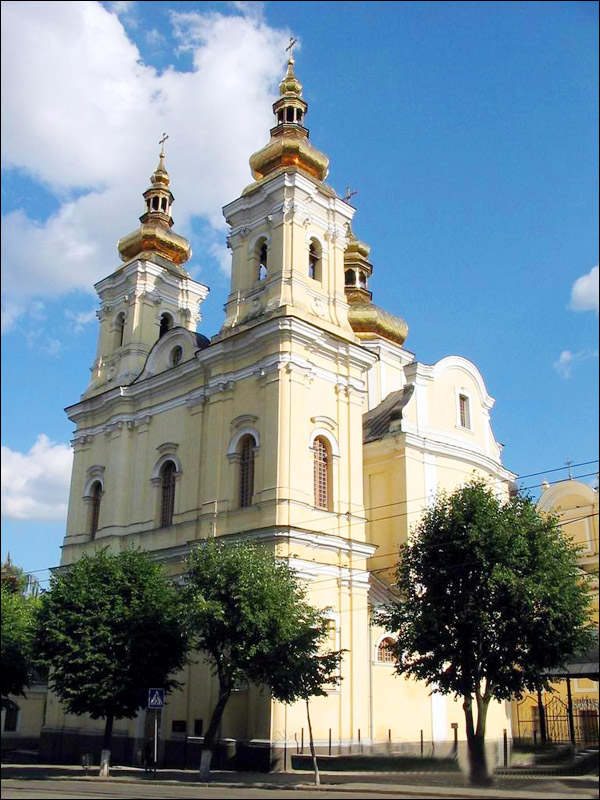
Holy Transfiguration Cathedral (1758-1779) - an architectural monument of national importance and the main Orthodox church in Vinnytsia built in the Baroque style and originally used as a Dominican church. Inside this cathedral, located in the historic center of the city, you can see beautiful frescoes and stained glass windows. Soborna Street, 23.
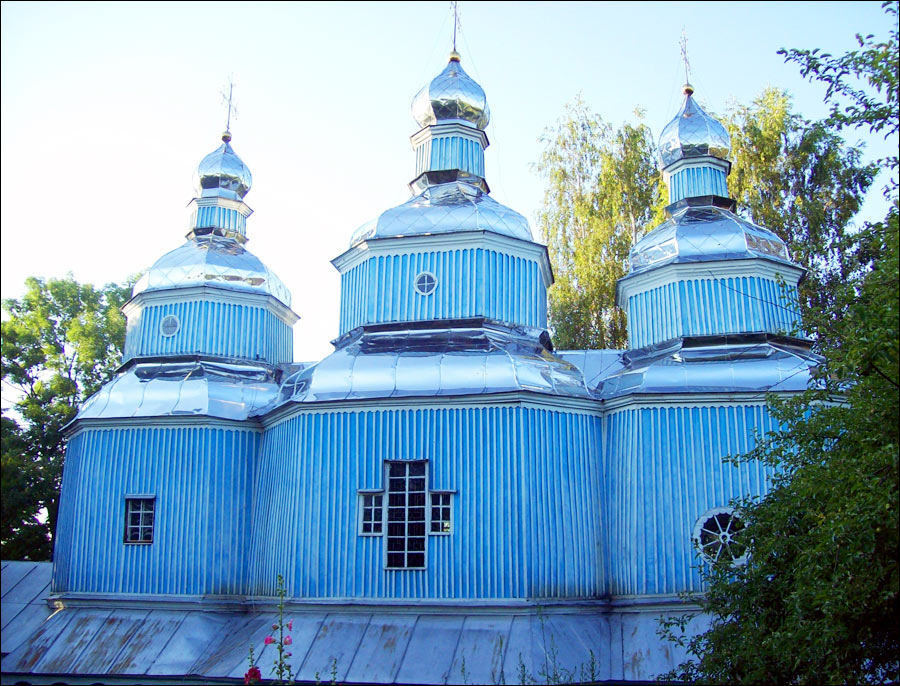
Church of St. Nicholas (1746) - the oldest functioning Orthodox church in Vinnytsia. This is one of the few wooden churches in Ukraine, which, after several centuries, has been preserved in its original form. It is one of the best examples of the Podolia school of wooden folk architecture. Mayakovs’koho Street, 12.
Vinnytsia Central Park - a park-monument of landscape art of national importance located in the center of Vinnytsia between Soborna Street, Mahistratska Street and Khmel’nyts’ke Highway. The area of ??the park is 40 hectares. This is one of the most favorite places for recreation of local residents and tourists. On the territory of the park there are a lot of monuments, a concert hall, a stadium, a skating rink, a city planetarium, rides, etc. There is also a mini-park with twelve copies of the famous architectural monuments of Vinnytsia.
Ruins of Hitler’s Headquarters “Wehrwolf”. Despite the fact that this unique complex of buildings, located about 10 km north of the center of Vinnytsia, is completely destroyed, it is still one of the most mysterious structures in central Ukraine. It is surrounded by numerous legends fueled by the fact that no excavations have been carried out on its territory.
The complex consisted of several underground concrete bunkers and a number of wooden buildings. There was a telephone and power station, a small airfield, and a vegetable garden. In the spring of 1944, during the retreat, the Germans blew up the entire complex. Today, you can see here only multi-ton concrete fragments scattered 10-30 meters after the explosion. Approximately 750 meters west along Turystychna Street there is an exposition of military equipment and weapons from the Second World War. Turystychna Street, Stryzhavka village.








The comments of our visitors