History of Uman
According to archaeological excavations, people lived on the territory of Uman already at the time of the late Paleolithic. Also the remains of settlements of the period of Kievan Rus, Scythian mounds were found here. In the 13th century, these lands were conquered by the Mongols. In the 14th century, this region came under the control of the Grand Duchy of Lithuania.
At the end of the 16th century, as part of the Polish-Lithuanian Commonwealth, it was subjected to Polish colonization. In 1609, the territory around Uman was granted to the patrimonial domain of Walenty Aleksander Kalinowski, a military leader of the Polish-Lithuanian Commonwealth. Uman was first mentioned in August 1616.
Kalinowski founded a castle, which greatly contributed to the rapid colonization of the area. According to one version, the town was named after the Uma River (today, it is the Umanka River). In 1629, the population of Uman was more than 1,000 people. The town became a large handicraft, commercial and administrative center, as well as a military outpost.
In 1648, during the Khmelnytsky Uprising (the Cossack-Polish War), Uman was captured by a detachment of insurgents led by Ivan Ganzha, the town became the administrative center of the Uman regiment. From 1648 to 1667, the town of Uman was an important fortress of the Cossack-Hetman state.
More Historical Facts…
In 1667, according to the Truce of Andrusovo, Uman again became part of the Polish-Lithuanian Commonwealth. In 1674, it was completely destroyed. After the 15 day siege, the town was taken by Merzifonlu Kara Mustafa Pasha, an Ottoman military commander. After these events, Uman fell into decay.
The decline continued until 1726, when Uman and the surrounding area became the property of Franciszek Salezy Potocki, a Polish nobleman. To strengthen Uman, Potocki encouraged the resettlement of peasants and artisans from his other possessions, invited Armenians, Greeks, Jews to trade in the town, began the construction of a new castle. In 1761, the construction of the castle was completed. In 1764, Franciszek Salezy Potocki founded the Basilian monastery and church in Uman.
In 1768, during the Koliyivshchyna, a major Cossack rebellion, Jews, Ukrainian Uniates (Greek Catholics) and the Polish gentry were massacred in Uman - the so-called “Uman massacre”. After the suppression of the uprising, Uman again fell into decay. The population was almost gone, the trade withered. In 1775, there were 159 houses, 3 churches, a stone town hall, a monastery church and the Vasiliansky church in the town.
In 1793, as a result of the second partition of Poland, Uman became a county town of the Russian Empire. In 1796, Count Stanislaw Szczesny Feliks Potocki laid the garden and landscape park Sofiyivka, one of the largest in Europe. Potocki gave it to his wife Sophia. Today, it has become one of the main sights of Uman.
At the beginning of the 19th century, Uman became the center of the Jewish religious movement - the Hasidism. Rabbi Nachman, the great-grandson of Rabbi Baal Shem Tov, the founder of the Hasidism, lived his last years in Uman. In 1810, he died of tuberculosis and was buried in the old Jewish cemetery, where the victims of the Koliyivshchyna had also been buried. Today, there is a synagogue on the site of the house where he lived.
In 1859, the Main School of Gardening (today, Uman National University of Horticulture) was transferred to Uman from Odessa. From the second half of the 19th century, the population of Uman increased significantly. In 1860, the population was 10,000 people, in 1897 - 29,000 people. It was influenced by the construction of a railway that connected Uman with Kyiv (1890) and Odessa (1891).
In the 19th - early 20th centuries, the town developed as an industrial center of a large agricultural area. In 1900, the population of Uman was about 30,000 people, 21,500 were Jews.
July 30, 1941, Uman was occupied by German troops. During the occupation, a cemetery for the German soldiers was organized on the territory of the Sofiyivka Park. More than 25,000 townspeople, including about 13,000 Jews, were killed. Uman was liberated on March 10, 1944.
After the war, Uman became a district center famous primarily for its unique park. Also, thousands of pilgrims from over 20 countries come here every year to pray at the grave of their spiritual leader, Rabbi Nachman.
Uman views
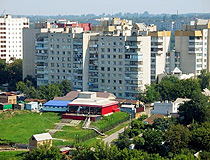
Apartment houses in Uman
Author: Sergey Zozula
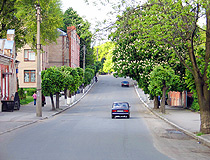
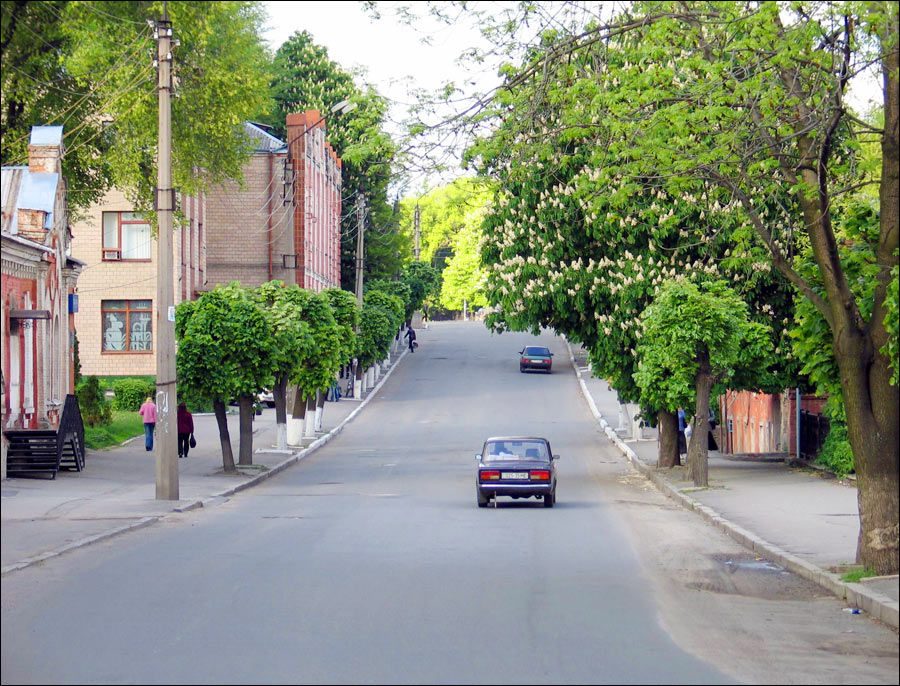
On the street in Uman
Author: Sergey Zozula
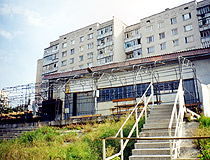
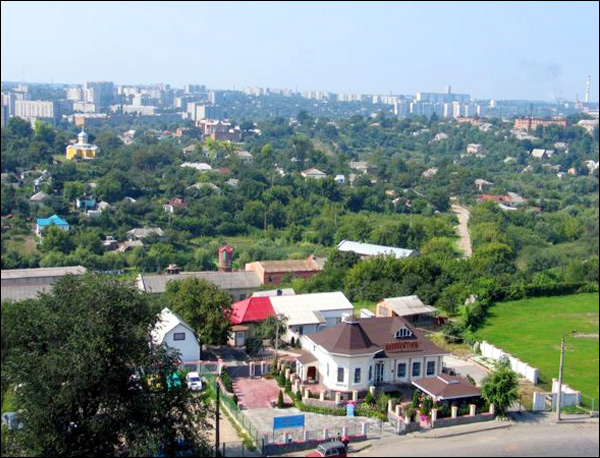
Uman cityscape
Author: Ron Krief
Uman - Features
Uman is a city of regional subordination with developed industrial, scientific, educational, socio-cultural, administrative, and tourist functions. The tourist infrastructure is developing at a low pace, its level so far leaves much to be desired.
The highway M05 (Kyiv - Odesa) passes near Uman. The newly renovated bus station is the point of departure for suburban and intercity buses to such cities as Kyiv, Cherkasy, Odesa, Vinnytsia, and is also a place for transfer from all corners of Ukraine.
The climate of Uman is moderately continental with mild winters and warm summers. The average temperature in January is minus 7 degrees Celsius, in July - plus 22 degrees Celsius.
The city has a rich historical and cultural heritage. Three sights of Uman are the national monuments of Ukraine: National Dendrological Park “Sofiyivka” (1896), Shopping Rows (1780), the Catholic Church of the Assumption of the Virgin (1826). In the city there are more than 30 monuments of local importance. The complex of architectural monuments of Uman is declared the State Historical and Architectural Reserve “Old Uman”.
Also Uman is the world famous center of the Hasidism. The grave of Rabbi Nachman of Breslov, the founder of the Breslov Hasidism, is located here. Every September, on Rosh Hashanah (the Jewish New Year), mass Hasidic pilgrimages are made to Uman from all over the world, more than 30,000 pilgrims (mostly men).
This practice dates back to 1811, one year after Rabbi Nachman was buried here. Before his death, he told his followers that they should join him for Rosh Hashanah. That’s why pilgrims still visit him every year during the Jewish New Year. In Soviet times, the pilgrimage was forbidden by the authorities. In 1989, it was resumed.
Main Attractions of Uman
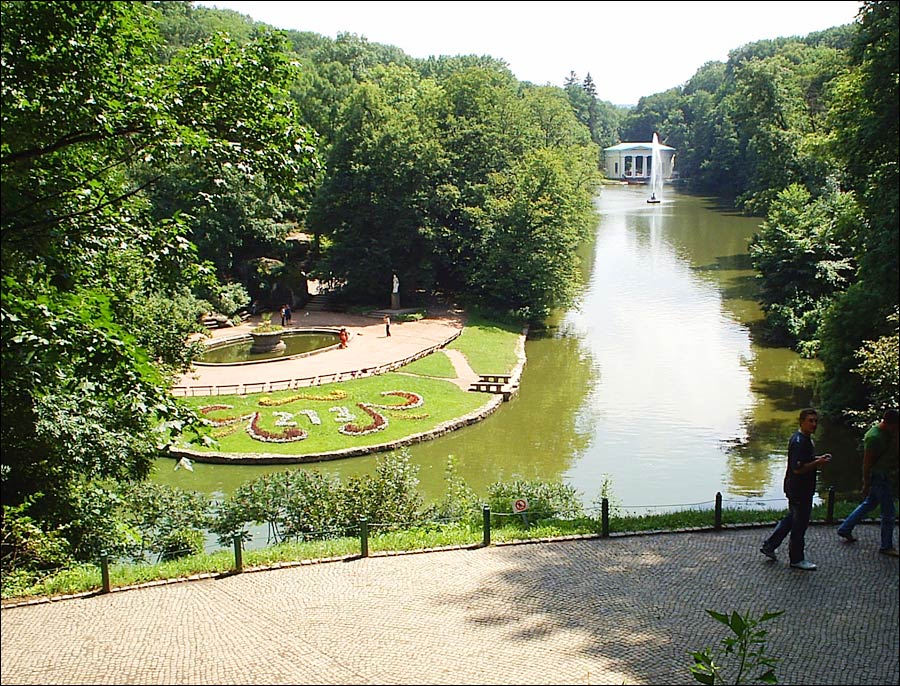
Arboretum Sofiyivka (1796-1805) - a masterpiece of landscape art of world level, a great example of the landscape composition of water, land, architectural structures, and sculptures. There are a lot of waterfalls and narrow, arching stone bridges crossing the streams and scenic ravines.
Probably, these bridges inspired Rabbi Nachman of Breslov. His famous quote is: “The world is just a narrow bridge, but the main thing is not to be afraid.” It was set to music in both Hebrew and English, and is still sung by Jews around the world.
In total, there are more than 100 monuments of history and culture here. We recommend visiting the park on weekdays, on weekends, there are too many visitors. The park is open for visits throughout the year. The excursion season lasts from April 7 to November 15. Kyivs’ka St, 12?. Opening hours: 09:00-18:00.
Grave of Rabbi Nachman of Breslov - a historical and cultural center, one of the most revered shrines of Hasidim, the place of annual mass pilgrimages. During the Second World War, the grave was destroyed. In Soviet times, a residential neighborhood was built on the site of the cemetery.
After 1991, pilgrims again could freely visit this place. The surrounding houses were partially or completely redeemed, a temporary synagogue was built on the site of the grave. The plans are to build the world’s largest synagogue for 5,000 people. Bjelins’koho Street, 3
St. Nicholas Cathedral (1812) - a monument of architecture of the 19th century built on the donations of the townspeople in honor of the victory over Napoleon. It is located in the center of Uman, on the territory of the former fortress. Nebesnoi Sotni Street, 35/2.
Uman Light and Music Fountains. The complex of light and music fountains “The Pearl of Love” was opened in the park named after Taras Shevchenko in 2017. Placed simultaneously on land and on water, the fountains in Uman are among the three largest fountains of Ukraine.
The complex includes the main bowl of the fountain on land with a light and music show on the water screen, a floating fountain on Ostashivs’kyi pond and three static fountains with a light-dynamic illumination. In light-music mode, the fountains work daily from 21:30 to 23:00. From Friday to Sunday, at 21:30, 22:00 and 22:30, you can enjoy a light and music show on the water screen.
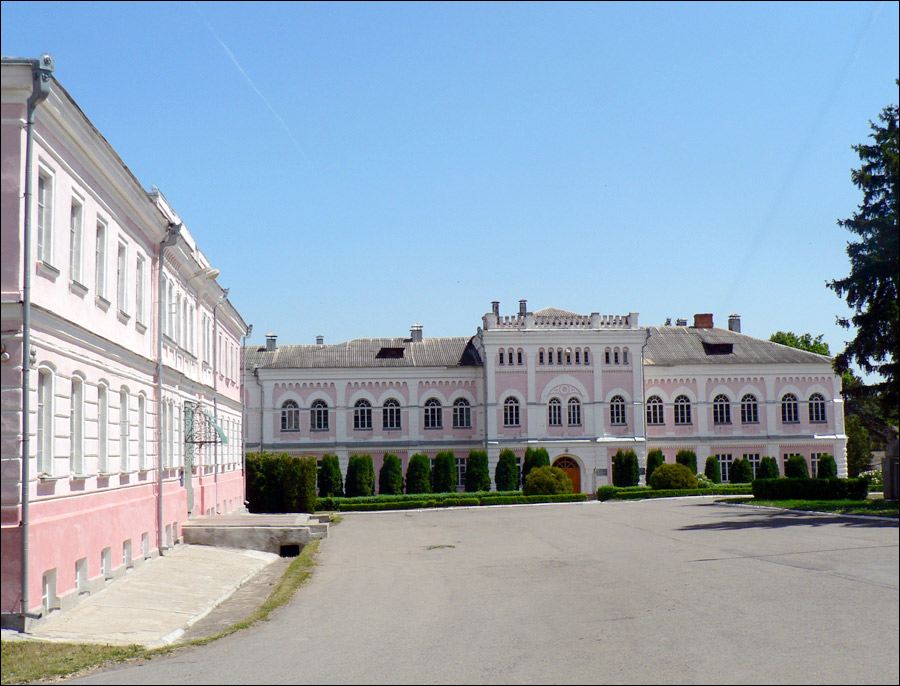
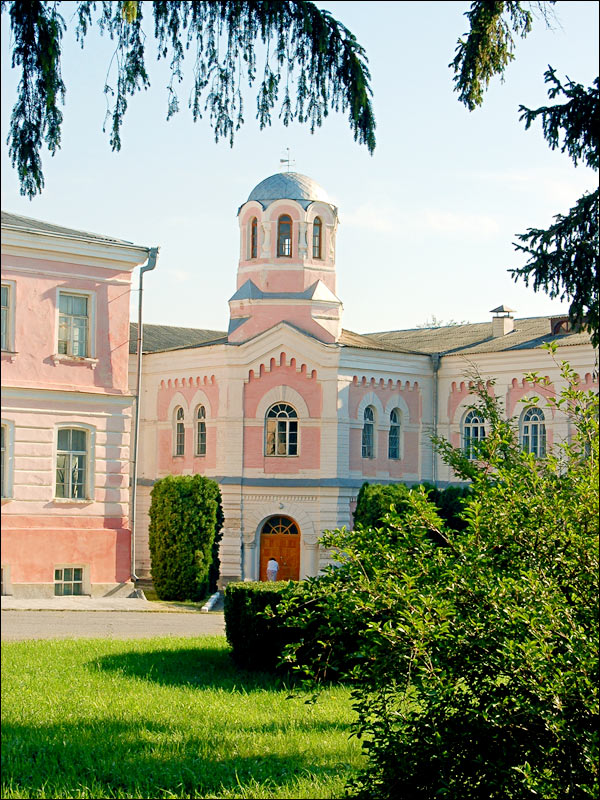
Uman National University of Horticulture (1859). In the middle of the 19th century, the Main Horticulture School was transferred from Odessa to Uman. The school became responsible for the Sophia Park (also known as the Tsar’s Garden). In the service part of the park, a two-story building in the style of classicism was constructed. Since then, students are courting the park, using it to improve their gardening skills. Instytuts’ka Street, 1.
Basilian Monastery (1764-1784) - the oldest building in Uman constructed for the Uniate monastery with the Catholic Basilian school, which became the cradle of the poets of the “Ukrainian school” in Polish literature. The monastery was closed in 1832.
Today, the complex of the Basilian Monastery is occupied by the Pedagogical School named after Taras Shevchenko. In underground spaces, the tourist route “Mysterious dungeons of the Basilian Monastery” is organized. Nebesnoi Sotni Street, 31.
Uman Local History Museum. The museum is located in the building of the former private hospital built in 1906. There are three departments devoted to the origin of life on Earth, geological structure, minerals, water system, soils, climate, flora and fauna.
There are stuffed animals and birds listed in the “Red Book of Ukraine.” In the historical department you can see a model of the Uman fortress, old weapons and armor. Nezalezhnosti Street, 31. Opening hours: 09:00-17:00. Day off: Monday.
Uman Picture Gallery. The picture gallery occupies the building of the Assumption Church built in 1826. There are two permanent exhibitions: “Western European and Ukrainian art of the 19th - early 20th centuries and “Contemporary Ukrainian Art”. On Sundays, divine services are held. Kolomens’ka Street, 2. Opening hours: 08:16:30. Day off: Wednesday.










The comments of our visitors