


Sumy - Overview
Sumy is a city located in the north-east of Ukraine, the administrative center of the Sumy region.
The population of Sumy is about 256,000 (2021), the area - 95 sq. km.
The phone code - +380 542, the postal codes - 40000-40035.



The capital city of Sumy oblast.
Sumy is a city located in the north-east of Ukraine, the administrative center of the Sumy region.
The population of Sumy is about 256,000 (2021), the area - 95 sq. km.
The phone code - +380 542, the postal codes - 40000-40035.

People began to settle on both banks of the Psel River from ancient times. In the south-western suburbs of the present city of Sumy, the remains of the burial places of the 1st millennium BC were found. In the 2nd-6th centuries AD, Slavic tribes lived here.
In the central part of Sumy there are remains of an ancient Russian settlement of the 11th century, on the basis of which the settlement of Sumin appeared in 1652. Until 1659, these places were inhabited by several waves of settlers from behind the Dnieper River and the exact date of the foundation of Sumy is not known.
One of the reasons for the founding of Sumy was the political situation of the second half of the 17th century. In 1651, the Ukrainian Cossacks under the leadership of Bohdan Khmelnytsky were defeated near Berestechko, the consequence of which was the intensification of exploitation and national oppression of the Ukrainian people by the Polish magnates.
After this defeat, the Ukrainian Cossacks began to move massively to the region that became known as Sloboda Ukraine located at the borderlands with Russia, which was practically not inhabited before. “Sloboda” was the term for a free settlement without taxes obligations and “Ukraine” meant “borderland”. In 1654, according to Pereyaslav Agreement, the Ukrainian Cossacks swore allegiance to the Russian Tsar while retaining a wide autonomy.
In 1651-1660, a large number of new settlements appeared on this territory in addition to Sumy - Kharkiv, Trostyanets, Lebedin, and a lot of others. In 1655, by order of the Russian Tsar, it was allowed to settle 100 families of peasants and Cossacks in Sumy. Some historians consider this date the time of the foundation of Sumy.
In 1656-1658, a wooden fortress was built in Sumy. In 1658, Sumy became part of the Belgorod fortification line, which protected the southern borders of Russia from the attacks of the Crimean Tatars and became the center of the Sumy Sloboda Cossack regiment. Thanks to the profitable trade route that went through Putivl to Moscow, Sumy grew rapidly.
In 1659, 1663, 1668, Sumy was raided by Crimean Tatars. Despite the sieges, the Tatars never managed to capture the town. In 1702, the construction of the Resurrection Church was completed. Today, it is the oldest building of Sumy.
In the winter of 1708-1709, during the Northern War, before the Battle of Poltava, Peter I stayed in Sumy. According to the legend, the inhabitants of the town, by order of Peter I “solemnly and magnificently” met the New Year 1709.
Since the 1710s, industry and trade began to develop in Sumy. In 1732, the population of the town was about 7,700 people. In the second half of the 18th century, in connection with the liquidation of the Cossack self-government, the Sumy Cossack regiment was reorganized into the regular part of the Russian army, and the town lost the status of a regimental center and became a provincial town.
In the 19th century, Sumy became a major commercial center. In 1877, through Sumy, a railway was built, connecting the town with Lyubotin and Vorozhba. In the late 19th - early 20th centuries, in addition to sugar beet and leather industries, metal-working, machine-building, sugar-refining industries began to develop. In 1877, the population of Sumy was about 15,500 people.
In 1918-1919, during the Civil War in Russia, power in Sumy changed several times. During the industrialization of the 1930s, Sumy became the center of production of equipment for sugar beet factories. Culture was also developing - a pedagogical institute, a museum of local lore and a theater were opened.
January 10, 1939, the city became the administrative center of the Sumy region. October 10, 1941, during the Second World War, Sumy was occupied by German troops. September 2, 1943, the city was liberated by Soviet troops.
Significant development of Sumy began in the 1950s - thanks to the considerable growth of industry: machine-building, chemical, instrument-making, food, and light industries. Sumy became a major industrial center of the Ukrainian SSR.
Ukraine’s independence has affected all spheres of life in Sumy. Local residents remembered about the great historical heritage of the city. In recent years, the restoration of the central part of Sumy is carried out.
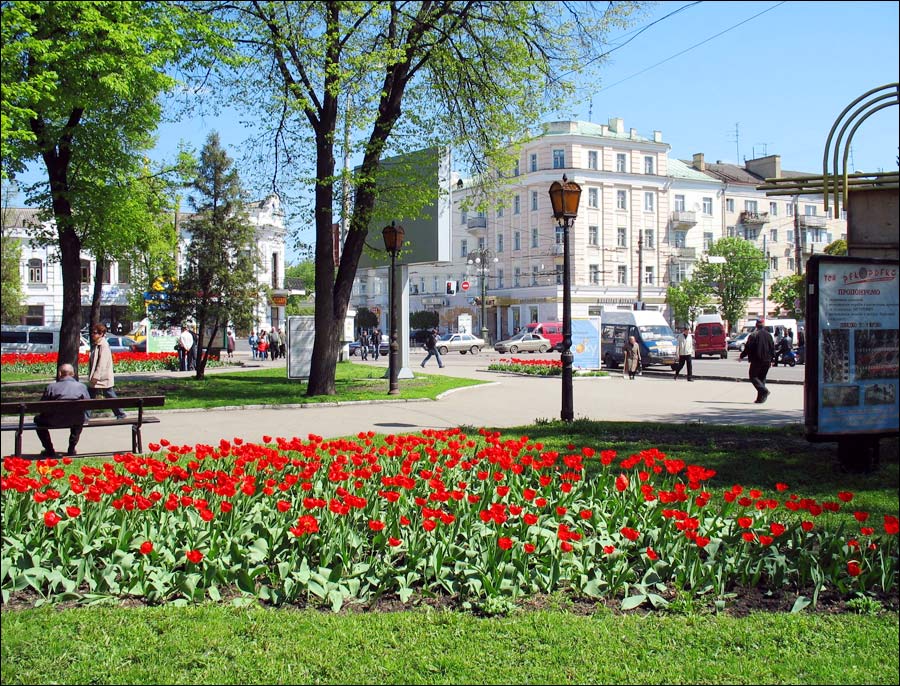
Summer in the center of Sumy
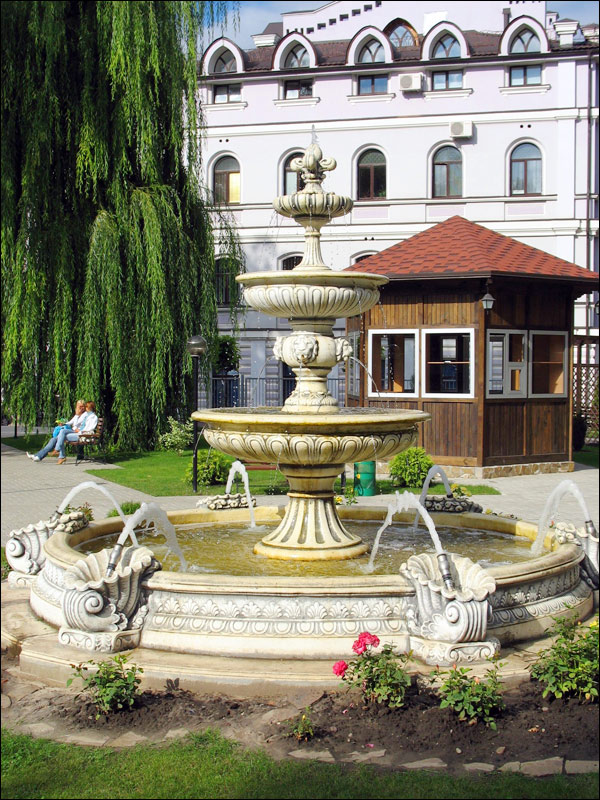
Fountain in Sumy

Sumy architecture
The city of Sumy is located on the banks of the Psel River, at its confluence with the Sumka River. The climate of Sumy is moderately continental, with mild winters and warm summers. The average temperature in January is minus 6.3 degrees Celsius, in July - plus 19.8 degrees Celsius.
There are several versions of the origin of the name of Sumy. According to the first version, the name of the city comes from the name of the rivers it was founded on (the Sumka and the Suma).
According to another version, Sumy received its name after the 3 “bags” (“suma” means “bag”) with gold coins found on the site of construction. Today, these “bags” are reflected on the coat of arms of Sumy.
Some researchers believe that the name of the city comes from the Ukrainian verb “sumuvaty” (to grieve), appealing to the feelings of migrants who were away from their native land.
The main branches of local industry are machine building, chemical and petrochemical industry. Sumy Machine-Building Research and Production Association is one of the largest enterprises of chemical, oil and gas engineering in Ukraine.
Public transport of Sumy is represented by minibuses, trolley buses, buses, and taxis. Intercity communication is carried out by trains and buses.
The architectural appearance of the central historical part of Sumy was formed in the period from the end of the 18th to the beginning of the 20th centuries. Today, Sumy is famous for its wonderful pedestrian areas with historical buildings, cathedrals, and monuments.
The City Day of Sumy is celebrated on the first Saturday of September in memory of the fact that the city was liberated during the Second World War on September 2, 1943.
Holy Resurrection Cathedral (1702) - the main Orthodox church of Sumy, the oldest stone building in the city, and a great example of Ukrainian baroque. The architecture of this two-story cathedral repeats the traditional forms of Ukrainian wooden church architecture - it is similar to the Cossack churches. Initially, the cathedral was part of the town’s defensive system. Nezalezhnosti Square, 19.
Transfiguration Cathedral (1776-1788) - a majestic church located on a pedestrian street in the heart of Sumy uniting in its appearance elements of Renaissance, Baroque, and Classicism. The height of the bell tower with chimes is 56 meters. Soborna Street, 31.
Trinity Cathedral (1901-1914) - one of the most beautiful churches in Sumy and Ukraine built in the style of classicism with baroque elements, similar to St. Isaac’s Cathedral in St. Petersburg, Russia. Troitska Street, 24A.
Art Museum. Sumy Regional Art Museum named after N. Onatsky is located in the building of the former State Bank built in the early 20th century. Paintings created by Italian artists of the 17th-19th centuries are of the greatest interest.
There are also paintings made by such famous artists as Shishkin, Kuindzhi, Levitan, Savrasov, Vasnetsov, Serov, Kotarbinsky, Aivazovsky. Pokrovskaya Square, 1. Opening hours: 9:00-17:00 (Thursday - 16:00). Day off: Friday.
Sumy Regional Museum (House with Caryatids) (1889). On the pylons of the second floor of this picturesque building you can see four caryatids (sculpted female figures) that support the balcony.
The exposition presents items from archaeological excavations of Early Slavonic and Old Russian monuments, rare materials on the history and nature of the Sumy region. Herasima Kondratieva Street, 2. Opening hours: 9:00-17:00. Day off: Monday.
House-Museum of A.P. Chekhov. The museum was opened in the manor of the noble family of Lintvarev (the 18th-19th centuries). In 1888-1889, the writer lived in the western wing of the manor. Chekhov used his impressions of life in Sumy in several of his stories and plays.
You can see the restored interiors of the living room and dining room, guest rooms, and “Antosha’s room”, which served Chekhov’s bedroom and study room. Chekhova Street, 79. Opening hours: 10:00-17:00 (Thursday - 16:00). Day off: Friday.
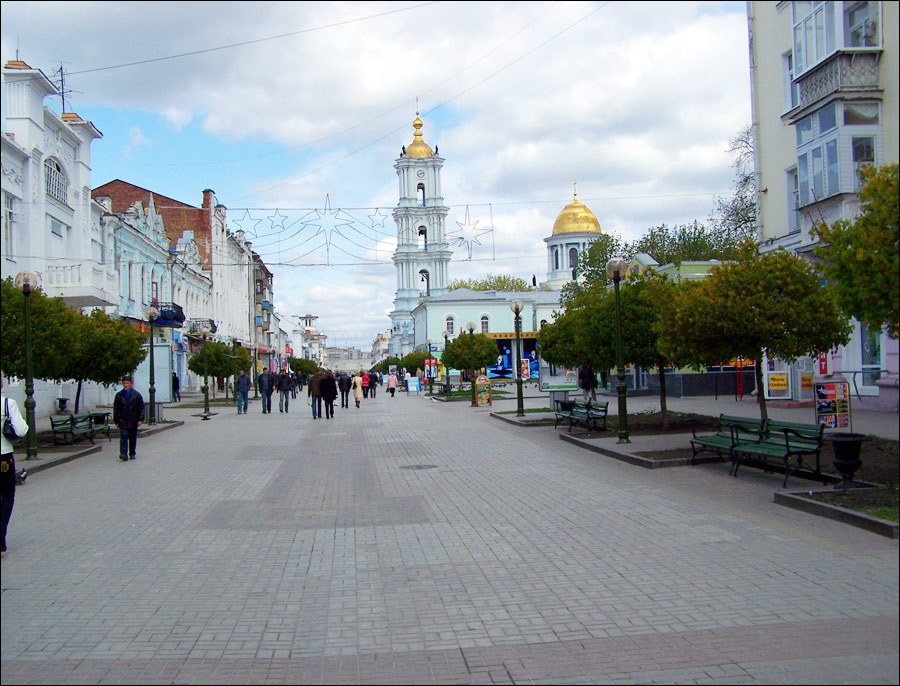
Pedestrian Soborna Street in Sumy
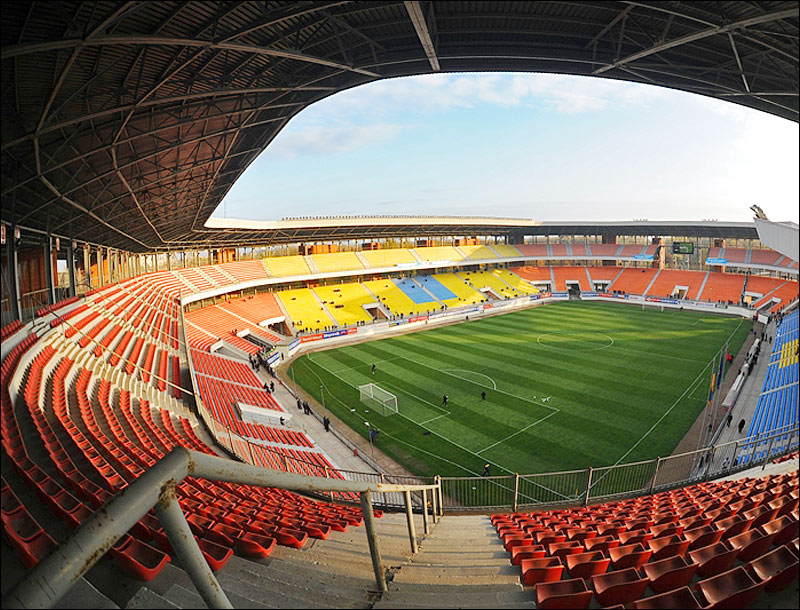
Yuvileiny Stadium in Sumy
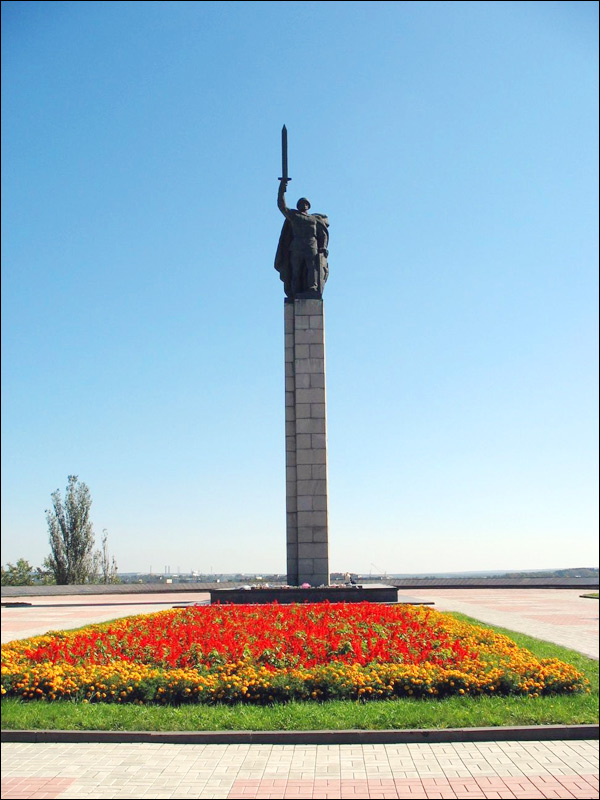
World War II memorial in Sumy
Altanka. This small carved wood gazebo, built without a single nail in the 19th century, is considered one of the symbols of Sumy, the only wooden structure in the city, which was not damaged during the Second World War. Kharytonenka Public Garden. Pokrovska Square.
Children’s Park Kazka (“Fairy Tale”). The park is located in the central part of Sumy. On its territory, in addition to children’s rides, there are fairy-tale buildings and figures of fairy-tale characters. In addition, this park regularly opens a mobile zoo and circus, as well as city-wide recreational activities. Tarasa Shevchenka Avenue.
Fountain-Monument to “Suma” (“Bag”). This fountain-monument was installed on Voskresenska Street, one of the central pedestrian streets of Sumy, near the Holy Resurrection Cathedral, in 2008. It symbolizes the legend of the foundation of the city.
According to legend, the first settlers-Cossacks found three hunting bags with coins on the place where a small river ran into the Psel River. The river was called Sumka, and the town founded here - Sumy. Voskresenska Street, 32
House of Assembly (Philharmonic) (1890). The House of Civil Assemblies for noblemen in Sumy is built in the end of the 19th century. On the first floor there were a music room, a theater hall, a restaurant. On the second floor - rooms for smoking and halls for gambling.
After the revolutionary events of 1917, the House of Civil Assembly was turned into a philharmonic society. The hall of the Sumy Regional Philharmonic Hall is famous for its acoustics. In 2008, major repairs were carried out and an organ was installed. Petropavlivs’ka Street, 63.
Park of Culture and Rest named after Kozhedub. The park with an area of 58 hectares is located right in the center of Sumy. There are a lot of rides in the park. Exhibitions, festivals, and other cultural events are held regularly. Not far from the central entrance to the park you can find Yuvileiny Stadium. Haharina Street, 15.
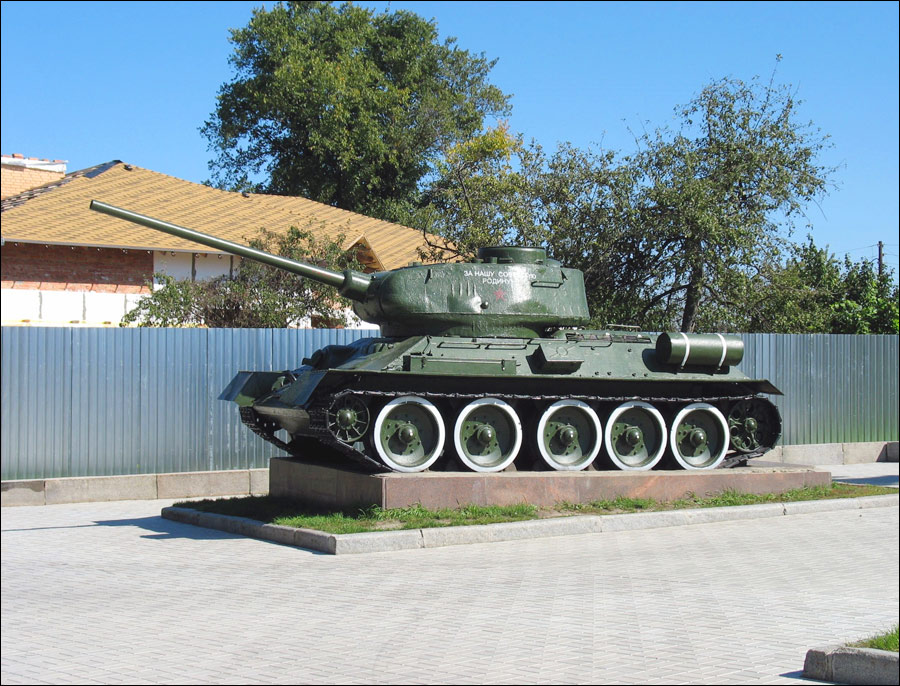
Tank T-34 monument in Sumy
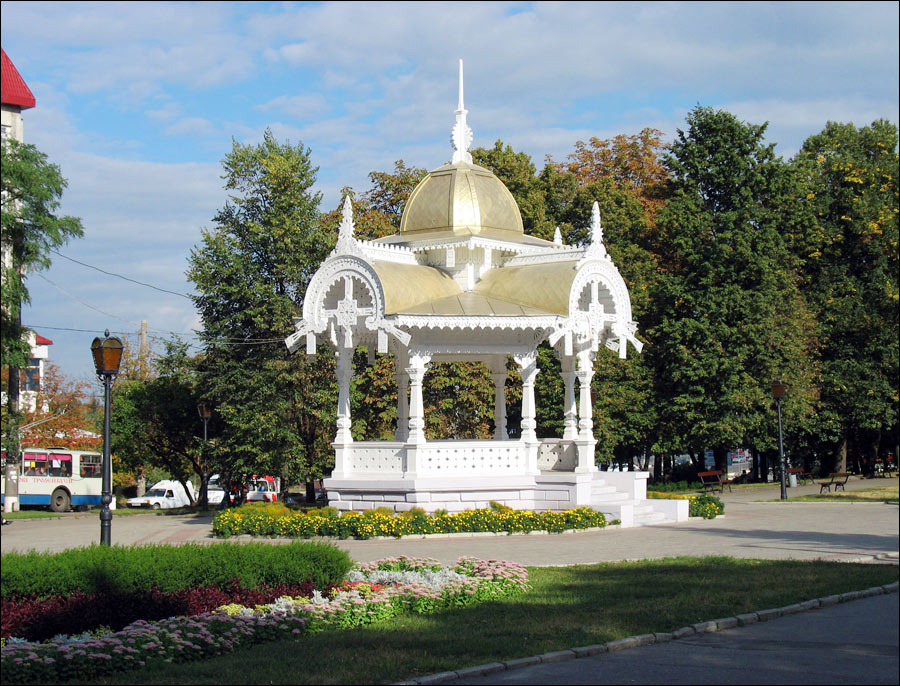
Altanka - the symbol of Sumy
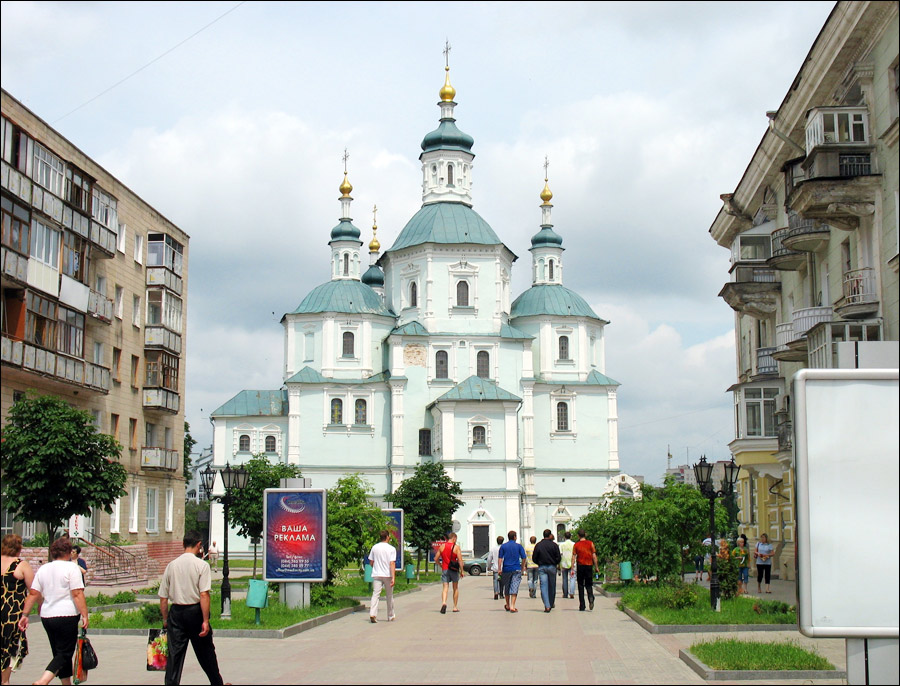
Holy Resurrection Cathedral in Sumy
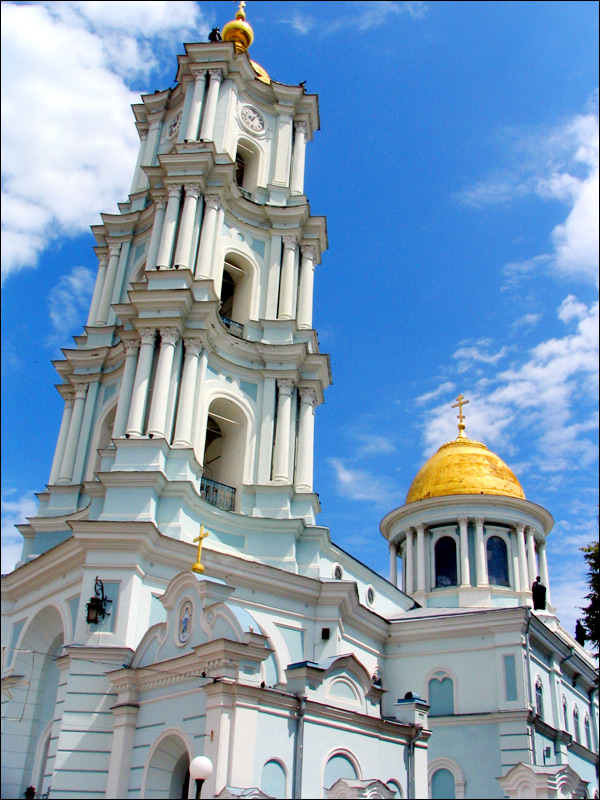
Transfiguration Cathedral in Sumy
 ask a question about Sumy city to our Expert
 contact us by email, if you have any proposals
Rate this page:
