Ukraine - Overview
Ukraine is the second largest country in Europe located in its southeastern part. Ukraine is a unitary state and a parliamentary-presidential republic. It is an industrial-agrarian country with a predominance of raw materials.
Total area: 603,549 sq. km. (233,100 sq. mi.) - the territory according to the constitutional structure of the country with all the territories that are currently not under Ukrainian control.
Boundaries: north - Belarus; east - Russia; south - the Black and Azov seas; west - Poland, Slovakia, Hungary, Romania, and Moldova.
Elevations: the highest point - Mount Hoverla (6,762 feet or 2,061 meters); the lowest - Kyleutske in the Crimea (59 feet or 18 meters).
Population: about 41.17 million (2021) (without Crimea).
GDP (purchasing power parity): 441 billion USD, per capita - 12,660 USD (2022).
GDP (nominal): 151 billion USD, per capita - 4,349 USD (2022).
Largest cities: Kyiv (the capital of Ukraine), Lviv, Odesa, Donetsk, Kharkiv, Dnipro, Zaporizhzhia.
Major languages: Ukrainian and Russian.
Major religious groups: Orthodox Christians, Greek Catholics (Uniates), Protestants, Roman Catholics.
International calling code: +380.
Currency: Ukrainian Hryvnia (UAH), the average exchange rate - 37 UAH per 1 USD (2023).
Internet TLD: .ua
Time zone: UTC +2, UTC +3 (DST).
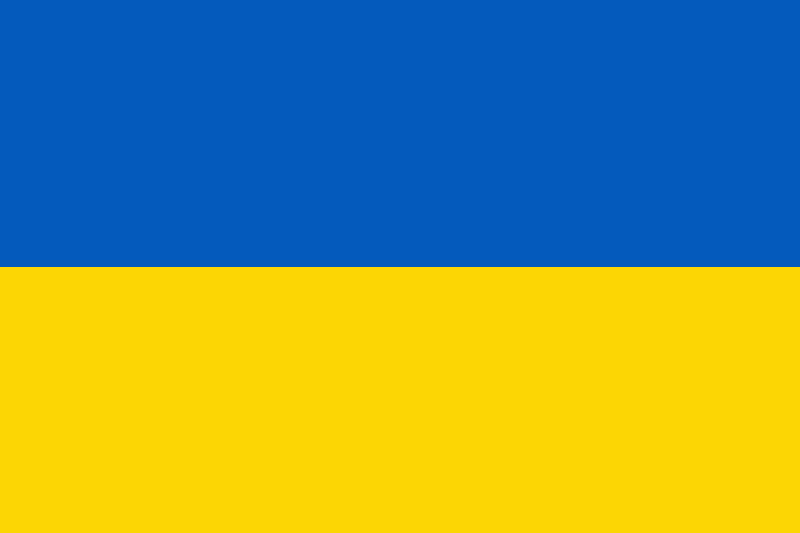
Flag of Ukraine
The flag of Ukraine, consisting of two equal horizontal stripes (the upper one is blue and the lower one is yellow), is the official state symbol of Ukraine and one of the national symbols of Ukrainians. According to the generally accepted interpretation of the flag, yellow symbolizes wheat fields, and blue - a clear sky above them.
One of the versions of the origin of the flag is associated with the year of 1708, with the permission made by the Swedish king Charles XII to Hetman Ivan Mazepa of the right to use the colors of the Swedish military flag - yellow and light blue - as flags on the peaks of the Cossack detachments.
From the 18th century, the Zaporizhzhya Cossacks began to use mainly yellow-blue flags. In 1803, Emperor Alexander I granted two banners of yellow-blue and blue-yellow colors to the Black Sea Cossack army, based on the Zaporizhzhya Cossacks.
Some researchers consider the starting point for the development of the current national flag of Ukraine in 1848, when the yellow-blue flag was first used during the revolution in the Austrian Empire by the Supreme Ruthenian Council in Lviv.
Geography of Ukraine
Ukraine on the world map
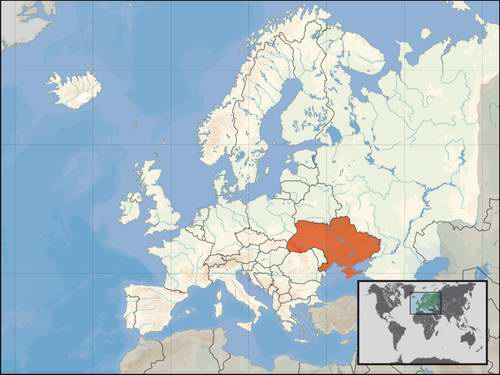
The control of Ukraine over the Crimean peninsula and parts of the Donetsk and Luhansk regions was lost in 2014.
As of 2023, as a result of the Russian invasion of Ukraine, Ukraine doesn’t control about two-thirds of the territory of Kherson Oblast (the entire territory on the left bank of the Dnieper River), about 70% of the territory of Zaporizhzhia Oblast (its southern and central parts), about two-thirds of Donetsk Oblast, and almost the entire Luhansk Oblast.
The territory of Ukraine is stretched from west to east by 1,316 km and from north to south by 893 km. The country is located in zones of pine and mixed forests, forest-steppes and steppes.
The geographical center of Europe, measured by the military department of Austria-Hungary in 1887 and by Soviet scientists after the Second World War, is located on the territory of present Ukraine, not far from the town of Rakhiv in the Zakarpattia region.
The relief of Ukraine is predominated by plains (95% of the total area), which belong to the southwestern part of the East European Plain. Mountains in Ukraine are represented by part of the Carpathian Mountains - the Ukrainian Carpathians, where the highest peak of the country is located - Mount Hoverla (2,061 m above sea level) and the Crimean Mountains, the highest peak of which is Mount Roman-Kosh (1,545 m).
Throughout Ukraine, the climate is moderately continental. The average temperature in January (the coldest month) ranges from minus 7-8 degrees Celsius in the northeast to plus 1-4 degrees Celsius in the south. In July (the warmest month), the average monthly temperature ranges from plus 17-19 degrees Celsius in the north and north-west of the country to plus 22-23 degrees Celsius in the southern regions.
Ukraine is one of the world’s leading mineral and raw materials countries. In total, the country has about 20,000 deposits and manifestations of 111 types of minerals. In particular, Ukraine holds leading positions in the world in terms of reserves and extraction of iron, manganese, titanium-zirconium ores, and a lot of types of non-metallic raw materials.
Brief History of Ukraine
People lived in the territory of present Ukraine since the Paleolithic era. In ancient times, state formations of the Scythians, the Greek colonists, the Goths appeared on this territory. The starting point of the Slavic statehood and culture was the Kievan Rus of the 9th-13th centuries.
After the Mongol invasion, the Kingdom of Galicia-Volhynia became its heir. Subsequently, these territories became part of the Kingdom of Poland and the Grand Duchy of Lithuania, which formed a federal state - the Polish-Lithuanian Commonwealth (1569-1795).
The formation of the new Ukrainian nation was intensified during the Khmelnytsky Uprising also known as the Cossack-Polish War (1648-1657). The result of the war was the creation of a Cossack state in the Dnieper River basin. After 1667, it was divided between the Commonwealth and the Moscow Kingdom. In the 18th century, after the majority of Ukrainian lands became parts the Russian Empire, local autonomy was gradually abolished.
In the early 20th century, during the Civil War in the former Russian Empire, several national states appeared on the territory of Ukraine: the Ukrainian People’s Republic, the Ukrainian State, the Western Ukrainian People’s Republic, and others. In 1917-1921, as a result of several wars, these states were seized by their neighbors: Soviet Russia, the Polish Republic, the Kingdom of Romania, and the Czechoslovak Republic.
On the Russian territory, the Ukrainian Socialist Soviet Republic (USSR) was established, which became one of the founding states of the Soviet Union in 1922. During the Second World War, Western Ukraine was annexed to the Ukrainian SSR. After the war, Transcarpathia became part of the country, in 1954 - the Crimea.
Ukraine as an independent state was formed as a result of the collapse of the Soviet Union. Independence of Ukraine was proclaimed on August 24, 1991.
The Ukrainian Revolution of 2014 (the Euromaidan Revolution, Revolution of Dignity), which took place in the winter of 2013-2014, led to the removal of the pro-Russian President Viktor Yanukovych and the formation of a new government focused on Ukraine’s accession to the European Union.
These events became a suitable occasion of armed aggression of Russia that included the annexation of the Crimea and the war in the east of Ukraine, in the Donetsk and Luhansk regions bordering on Russia.
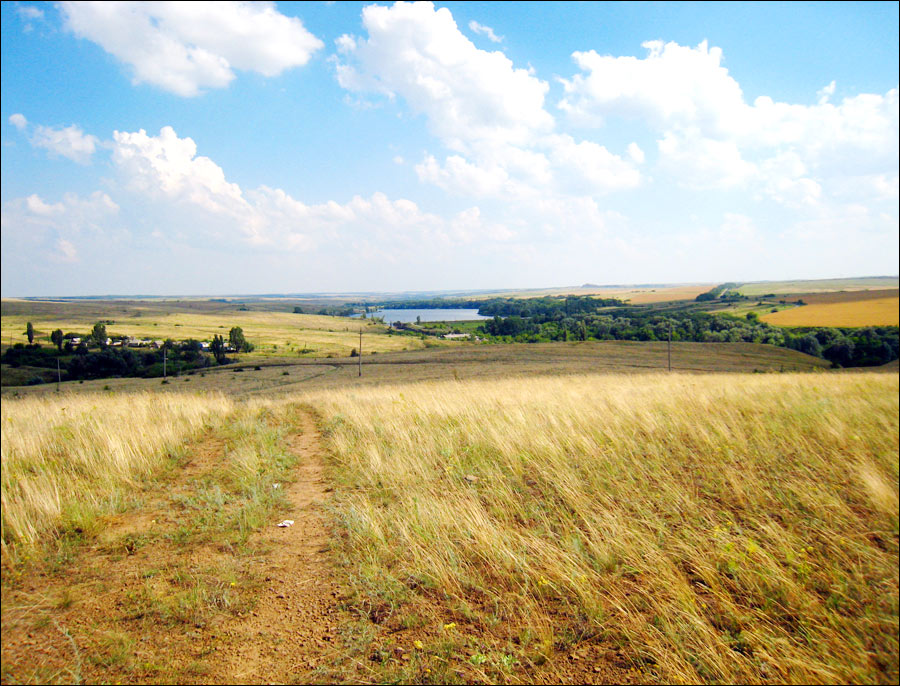
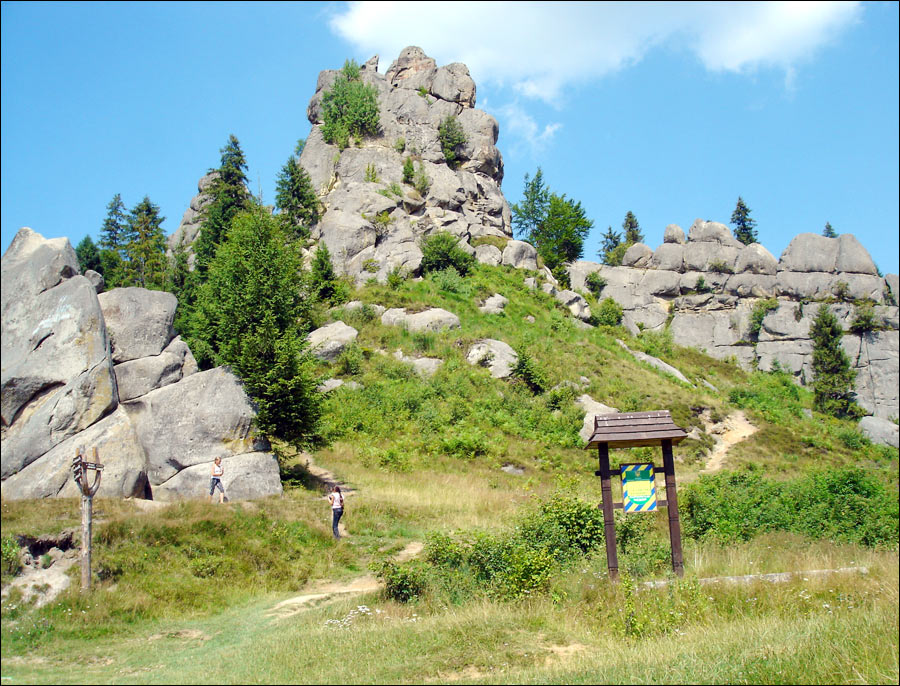
Diversity of Ukrainian nature
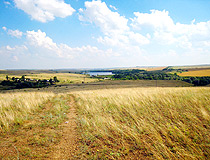
Fields of the Lugansk region
Author: Alexander Byelkin
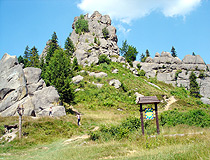
Rocks in the Lviv region
Author: Andriy Verh

Carpathian Mountains in the Zakarpattia region
Author: Andriy Chmelov
Ukraine - the Origin of the Name
According to the most widespread version, the name “Ukraine” (“Ukraina”) comes from the Old Russian word “oukraina” (“border region”), which was originally applied to different borderlands of Rus and the old Russian principalities.
According to the Brockhaus and Efron Encyclopedic Dictionary, since the end of the 16th century, after South-Western Rus in the Grand Duchy of Lithuania became part of the Polish-Lithuanian Commonwealth, part of its territory stretching from Podillia in the west to the mouth of the Dnieper in the south was unofficially called “Ukraina”.
This was due to the border location of these territories in the Polish state. In the 16th-18th centuries, “Ukraine” became a specific geographical concept equivalent to the names of other historical and ethnographic regions (Volyn, Podillia, Zaporozhye) - the territory in the Middle Dnieper controlled by the Cossacks. The people living there began to be called Ukrainians.
The number of Ukrainians gradually increased, and the name “Ukraine” spread to regions outside the original territory. During the Khmelnytsky Uprising, it began to be applied to the whole territory where military operations took place.
Since the 18th century, the concept of “Ukraine” was used in a geographical sense. As national self-consciousness grew, the meaning of the word increased. It become perceived not only as a geographical term, but also partly as a name for ethnic space. At the turn of the 19th and 20th centuries, the term “Ukraine” as the name of the entire ethnic territory became completely independent and self-sufficient, replacing other self-names.
Some Ukrainian historians and linguists put forward the version that the name “Ukraine” comes from the words “krai”, “kraina” meaning simply “country”, “a land populated by its people”. This version, in particular, is given in some school textbooks on the history of Ukraine.









The comments of our visitors